What is tree trimming?
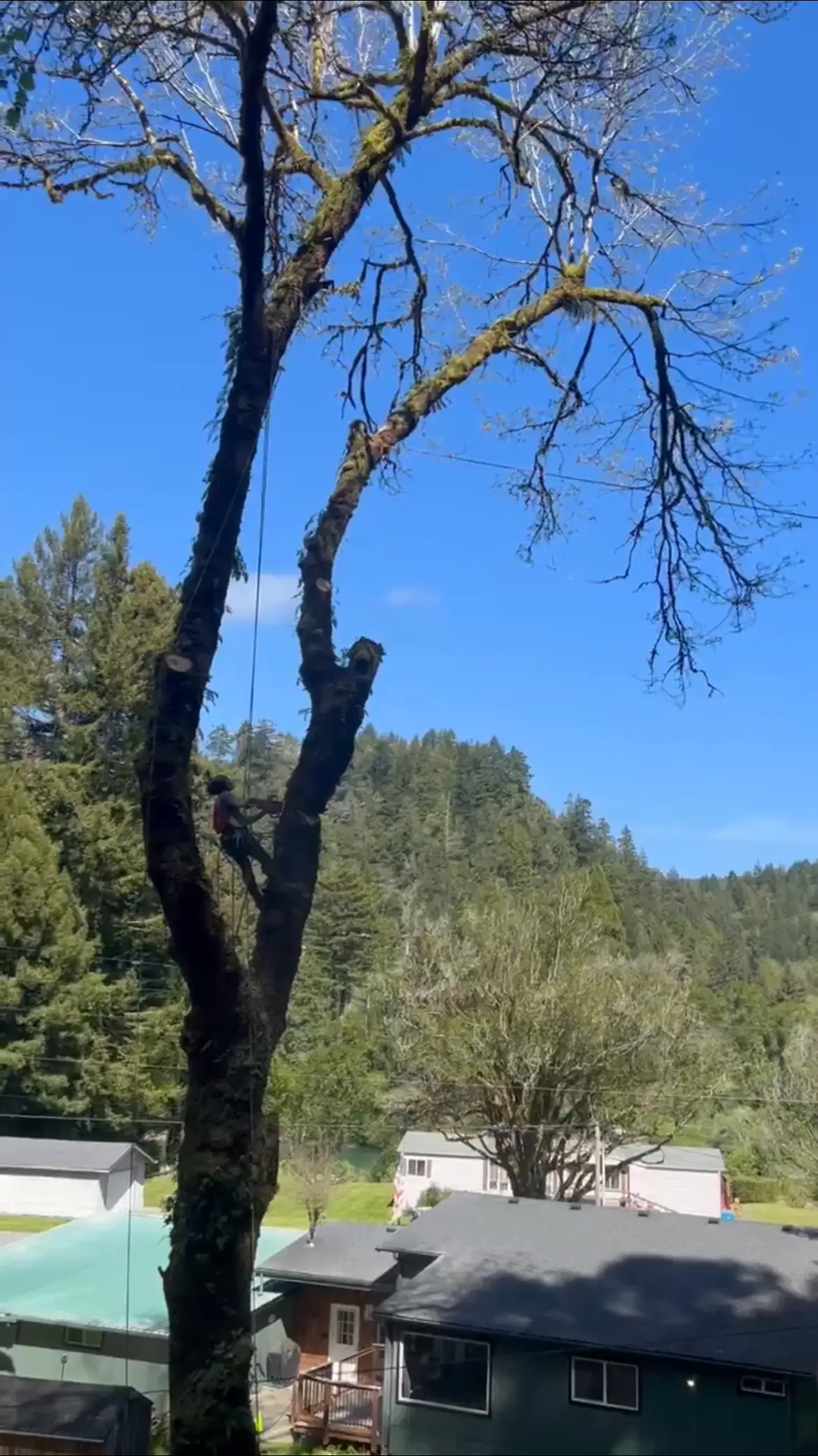
Tree trimming is selective pruning that manages a tree's structure, health, and clearance: removing dead and hazardous limbs, thinning crowded growth so wind passes through the crown, and lifting canopies clear of roofs and service lines. Done by an ISA certified arborist, it extends a tree's life; done wrong, it shortens it.
Why North Coast trees need regular trimming
Fog and rain keep trees on the Humboldt and Del Norte coast growing nearly year-round. That is wonderful for the forests and demanding for the trees in your yard, because growth means weight, and weight over a roof or a driveway is a liability with a timer on it.
The real deadline here is storm season. From October through February, Pacific fronts test every crown on the block. An overgrown canopy catches wind like a sail; a properly thinned one sheds it. Most of the storm damage we clean up each winter traces back to trimming that did not happen in the fall.
Signs your trees are overdue
Limbs touching the roof or gutters, dead branches visible in the crown, branches crossing and rubbing, a canopy so dense you cannot see sky through it, sprouts shooting straight up from old cuts, or limbs hanging over where kids play and cars park.
The best time to trim here
For structural work on most species, late fall through winter dormancy is ideal, and it lands right before the storms that punish overgrown crowns. Dead, broken, or hazardous limbs are the exception: those come off whenever they are found, regardless of season.
What arborist-led trimming includes
There is a difference between cutting branches and pruning a tree. We cut to the branch collar so wounds close properly, we keep live-crown removal within what the species tolerates, and we never top a tree. Every trim is planned around what the tree needs and what you need from it.
Crown thinning and wind-sail reduction
Selective interior cuts that let wind and light pass through the canopy. This is the single best storm-preparation money can buy for a big conifer near a house, because it reduces the force the whole tree has to resist in a blow.
Roof, chimney, and line clearance
Lifting and cutting canopies clear of roofs, gutters, chimneys, solar panels, and the service drop to your house. Clearance work keeps abrasion damage, debris loading, and rodent highways off your roof.
Deadwood removal
Dead limbs are the first thing storms throw at whatever is below them. Cleaning deadwood out of the crown removes the most likely failures and lets us inspect the tree's health up close while we are in it.
Structural pruning for young trees
Ten minutes of well-placed cuts on a young tree prevents the codominant stems and included bark that turn into thousand-dollar problems twenty years later. If you have planted trees in the last decade, this is the cheapest tree care you will ever buy.
Why we never top trees
Topping, cutting main stems back to stubs to make a tree shorter, is the most damaging thing commonly done to trees, and we do not do it. The regrowth that follows is fast, weakly attached, and more dangerous than what was removed, and the open stubs invite rot into the tree's structure. Any company that leads with topping is telling you what it does not know.
When a tree genuinely needs to be smaller, there are correct tools: crown reduction to sound lateral limbs, staged over time when needed, or an honest conversation about whether that tree in that spot has a future at all. We will always tell you which conversation you are in.
Why we never top trees
Topping means lopping the main stems off at an arbitrary height, and it is the fastest way to ruin a tree. The regrowth comes back weakly attached and fast-growing, so in a few years the tree is taller, denser, and more dangerous than before, with decay running down every stub. No reputable arborist tops trees, and we will always offer a better option: a proper crown reduction that brings size down at the right cuts, or a view corridor that opens the sightline without wrecking the tree.
Views, solar, and clearance trimming
A lot of North Coast trimming is not about the tree at all. It is about what the tree is blocking: the ocean view that sold you the house, the solar panels that stopped earning their keep at 2pm, the roofline collecting needles, or the driveway your delivery trucks scrape under.
Each of those has a right answer that keeps the tree healthy. View and vista pruning opens windows through the canopy instead of flattening it. Solar and roof clearance is selective, species-aware, and cut back to laterals so it lasts. Done right, you get the view and keep the tree, and the work holds for years instead of months.
What's included with every job
- ✓Health and structure assessment with every trim
- ✓Roof, chimney, and utility-drop clearance
- ✓Crown thinning and windsail reduction before storm season
- ✓Deadwood removal and proper collar cuts, never topping
- ✓On-site chipping and full cleanup