What is tree removal?
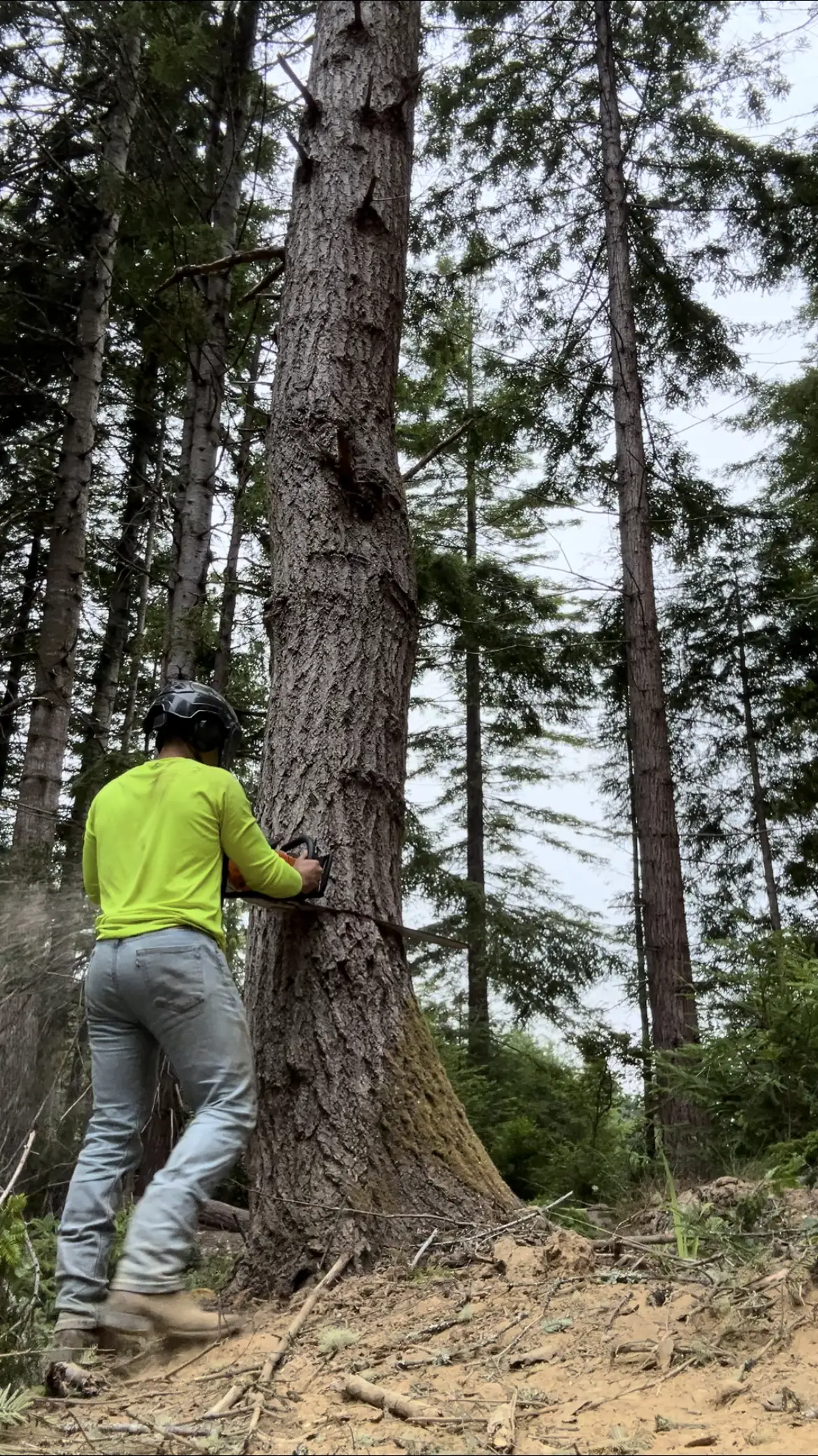
Tree removal is the controlled takedown of a tree, either felled whole where there is room or dismantled piece by piece with ropes and rigging where there is not. True Tree Service removes hazard trees, dead trees, and overgrown trees across Humboldt and Del Norte counties, with the wood and brush handled however the owner wants.
When a tree needs to come down
Nobody at this company enjoys taking down a healthy tree. Most of our removals are trees that made the decision themselves: dead or dying, structurally failing, or standing somewhere a tree simply cannot safely stand anymore. The North Coast makes the case regularly, because our winter storms find every weak tree on the block.
These are the situations where removal is usually the right call:
Dead or dying trees
A conifer with a brown or bare top third, a hardwood that failed to leaf out, bark sloughing off in sheets, or woodpecker activity suddenly everywhere. A dead tree only gets more dangerous and more expensive to remove the longer it stands, because dead wood loses the strength climbers and riggers depend on.
Leaning and storm-damaged trees
A lean that is new or getting worse, lifted soil or a cracked root plate on the uphill side, a partially failed top hanging in the canopy. After a storm moves a tree, the next storm usually finishes the job. We treat moved trees as priority calls.
Trees threatening structures
Redwoods and firs planted decades ago that now stand over the house, roots heaving foundations and sidewalks, limbs bearing on the roof with every wind. Sometimes trimming solves it. When it cannot, a controlled removal beats an uncontrolled one every time.
Clearing for projects
Shops, additions, fences, gardens, septic work, and view corridors. We drop, buck, chip, and grind so your project can actually start, and we can leave milling-quality logs long if you have plans for the wood.
How we remove a tree safely
Every removal starts with a walk of the site and ends with a rake. What happens in between depends on the tree and what is under it.
Assessment and a straight answer
An arborist looks at the tree, the targets around it, and the access, then tells you honestly whether it needs to come down at all. If trimming or cabling can save it, we say so. If it needs to go, you get a firm written number before any saw starts.
Straight felling where there's room
On open sites we fell the tree whole with directional cuts, wedges, and pull lines. It is the fastest and most economical removal when the lay allows it, and reading the lay correctly is exactly the kind of judgment you hire a professional for.
Piece-by-piece dismantling over structures
In yards, over roofs, near lines, and between fences, a climber takes the tree down in sections, rigging each piece to a lowering system so nothing free-falls. This is the heart of residential tree work on the North Coast, and it is the discipline our climbers train hardest.
Cleanup and wood handling
Brush gets chipped on site, wood gets bucked to firewood rounds, left log-length, or hauled away, your choice. The site gets raked. Our reviews mention the cleanup almost as often as the tree work, which is how we like it.
What tree removal costs on the North Coast
Every honest tree company answers this the same way: it depends, and anyone quoting sight-unseen is guessing. The factors that actually move the number are the size and species of the tree, its condition (dead and rotten wood takes slower, more careful work), what it stands over, how much rigging is required, access for equipment and chips, and what you want done with the wood.
A small clear-drop tree and a large conifer over a house are different jobs by an order of magnitude. That is why our quotes are free, on-site, and firm: you get the real number for your actual tree, in writing, and it does not change mid-job. Financing is available for larger removals, because a hazard tree does not wait for a convenient month.
Permits and protected trees
Tree rules on the North Coast depend on where you live. Incorporated cities like Arcata and Eureka handle trees differently than unincorporated Humboldt or Del Norte county land, and coastal-zone parcels, park-adjacent properties near the redwood parks, and protected species can add another layer.
We do not leave you to figure that out alone. Part of every removal quote is flagging whether your tree and parcel need any signoff before work starts, so the job is done right and stays done.
What your yard looks like when we leave
A removal is not finished when the tree is down. Rounds get bucked and hauled, or stacked for your firewood pile if you want them. Brush goes through the chipper on site, and the chips can stay for your garden paths or leave with us. We rake the lawn, blow off the driveway, and walk the yard with you before the truck pulls away.
Lawns and access routes matter to us because they matter to you. Where equipment has to cross grass we plan the route, and where there is no equipment access at all we carry the tree out in pieces by hand. Tight backyard removals are a specialty, not a surcharge surprise.
Storm damage and hazard trees
When a tree is already on the house, leaning after a blow, or hanging broken over the driveway, the job changes from scheduled work to triage. We prioritize hazard calls across Humboldt and Del Norte, document the damage for your insurance claim with photos and a detailed invoice, and make the scene safe before anything else.
If that is your situation right now, see our storm and emergency page for what to do first, or just call us at (707) 926-4983.
What's included with every job
- ✓Free on-site assessment and a firm written quote
- ✓Technical rigging for tight spaces and structures
- ✓Full cleanup: chipping, hauling, or firewood rounds on request
- ✓Licensed and insured crew, CSLB #1132934
- ✓Financing for larger removals