August 2026 · True Tree Service
How to Know When It's Time to Remove a Tree
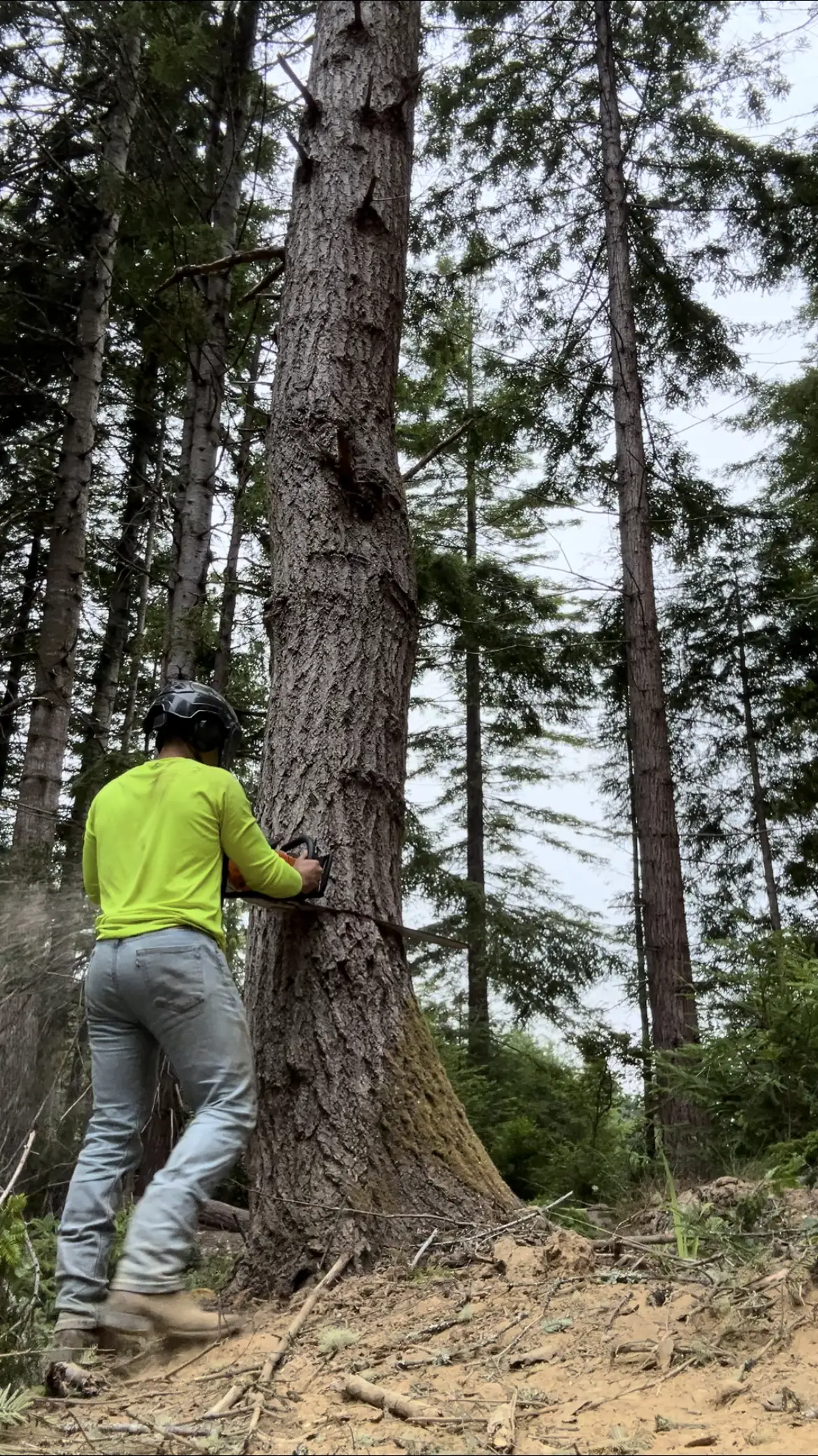
Nobody wants to take down a healthy tree, least of all us. But every winter on the North Coast, trees that gave plenty of warning end up on houses. Here is how to read the warnings, from a crew that sees the aftermath.
Signals to take seriously
A new or increasing lean is the big one. Trees can grow leaning their whole lives and be fine; what matters is change. If a tree that used to stand one way now stands another, especially after a storm, the root plate may be failing. Look for lifted or cracked soil on the side away from the lean.
Dead tops and major deadwood matter too. When the top third of a conifer goes brown or bare, the tree is telling you about its health below the surface. Big dead limbs in any tree are both a symptom and an immediate hazard in their own right.
Fungus is the quiet killer here. Conks or shelf mushrooms growing from the trunk or root flare mean decay is already working inside the wood. In our wet climate, root rot moves fast, and a tree can look green and full while its anchoring roots turn to sponge.
Cracks, seams, and included bark where two stems meet are structural faults. So is a trunk cavity you can see daylight through. Some of these can be managed with cabling and bracing instead of removal, which is worth asking about for a tree you love.
Things that look scary but usually aren't
Moss and lichen are harmless passengers on the North Coast; every healthy tree here wears them. Sap flow on conifers is normal. A hollow that squirrels use is not automatically a structural cavity. And losing needles or leaves in season is just a tree being a tree.
The cost math nobody likes to say out loud
A planned removal is a controlled, scheduled job. An emergency removal involves a tree that has already chosen its own direction, often a crane, sometimes a roofer, and always worse pricing than the planned version would have been. If a tree is on the fence, so to speak, the cheap option is dealing with it before the storm does.
If any of this sounds like a tree on your property, get a free assessment. If the tree can be saved, we will tell you how. If it cannot, we will tell you that too, with a firm number and no pressure. Either way you will know what you are living with before the next front rolls in.