Ferndale Windbreaks: Managing Old Cypress and Eucalyptus Rows on the Eel River Bottoms
Drive the roads around Ferndale and you will see the same thing on farm after farm: a straight line of huge, dark trees along the edge of a field or beside the house, leaning slightly away from the ocean. Monterey cypress, mostly, sometimes eucalyptus, occasionally both mixed together. They were planted as windbreaks when the dairies were laid out, back when a row of fast-growing trees was the only way to keep the wind off the barn, the house, and the herd.
A hundred years on, those rows are still doing their job, and they have become the biggest trees on most Ferndale properties. They are also, more and more, the biggest problem. Cypress and eucalyptus do not live forever, and a lot of the windbreaks in the valley are reaching the age where individual trees start to die, split, or blow over. This guide is about what to do with a row like that: how to keep it working, how to tell when a tree in it has to come out, and what it takes to remove a big cypress or eucalyptus next to a house or a barn without wrecking either.
Why the rows are what they are
Monterey cypress and blue gum eucalyptus were the trees of choice for a reason. Both grow fast in coastal wind and salt air, both tolerate the wet winters and dry summers of the Eel River bottoms, and both put on height quickly enough that a windbreak planted when a dairy was built was doing real work within ten or fifteen years. Nothing native to the valley grows that fast in that exposure.
The trade-off is what happens at the far end of their lives. Monterey cypress in this climate often live around a century, and as they age they develop heavy, spreading limbs, internal decay, and cankers that kill sections of the crown. Blue gum eucalyptus lives longer but sheds bark, drops limbs constantly, and grows so tall and so heavy that a mature one next to a barn is a liability whether it is healthy or not. Both species also have a habit that matters for windbreaks: when one tree in the row goes, the trees on either side of it suddenly take wind they have never been exposed to, and they start to go too.
Reading a windbreak: what to walk the row looking for
If you own a property with an old cypress or eucalyptus row, walk it once a year in late summer, before the winter wind. Here is what to look at, tree by tree.
- Dead sections of crown. On cypress, patches of brown or bare limbs, especially on the windward side, are the first sign of canker or decline. A tree with a third or more of its crown dead is not going to recover.
- Lean that is not the wind lean. Every tree in the row leans a little away from the ocean. A tree leaning a different direction, or leaning more than its neighbors, or leaning toward the house, is telling you something about its roots.
- Cracks and seams in the trunk, or where big limbs meet the trunk. Cypress limbs are heavy and often poorly attached, and a seam at the union is where the limb will come off.
- Fungus at the base. Conks or mushrooms on the trunk or root flare mean decay in the wood, and in a wet winter that tree can go over with its root plate.
- Hangers and broken tops from last winter. Cypress and eucalyptus both hold broken limbs in the crown for years. They come down eventually, and they come down without warning.
- Gaps in the row. If a tree has already gone, look hard at the trees on either side of the gap. They are the next to fail.
- Eucalyptus bark and limb litter under the tree. If the pile is getting bigger every year, the tree is shedding more, which usually means it is getting more stressed or simply too big for its structure.
Take photos of anything that looks off and send them with the quote form. A row is a lot of trees, and it helps to have an arborist walk it with you once and tell you which ones matter this year and which can wait.
Keeping a windbreak working
The goal with most windbreaks is not to remove them. A working row of cypress does a job no fence can, and a healthy row can go on doing it for decades. The maintenance is mostly about taking weight and hazard out of the trees so they stay standing.
Deadwooding and hazard limbs
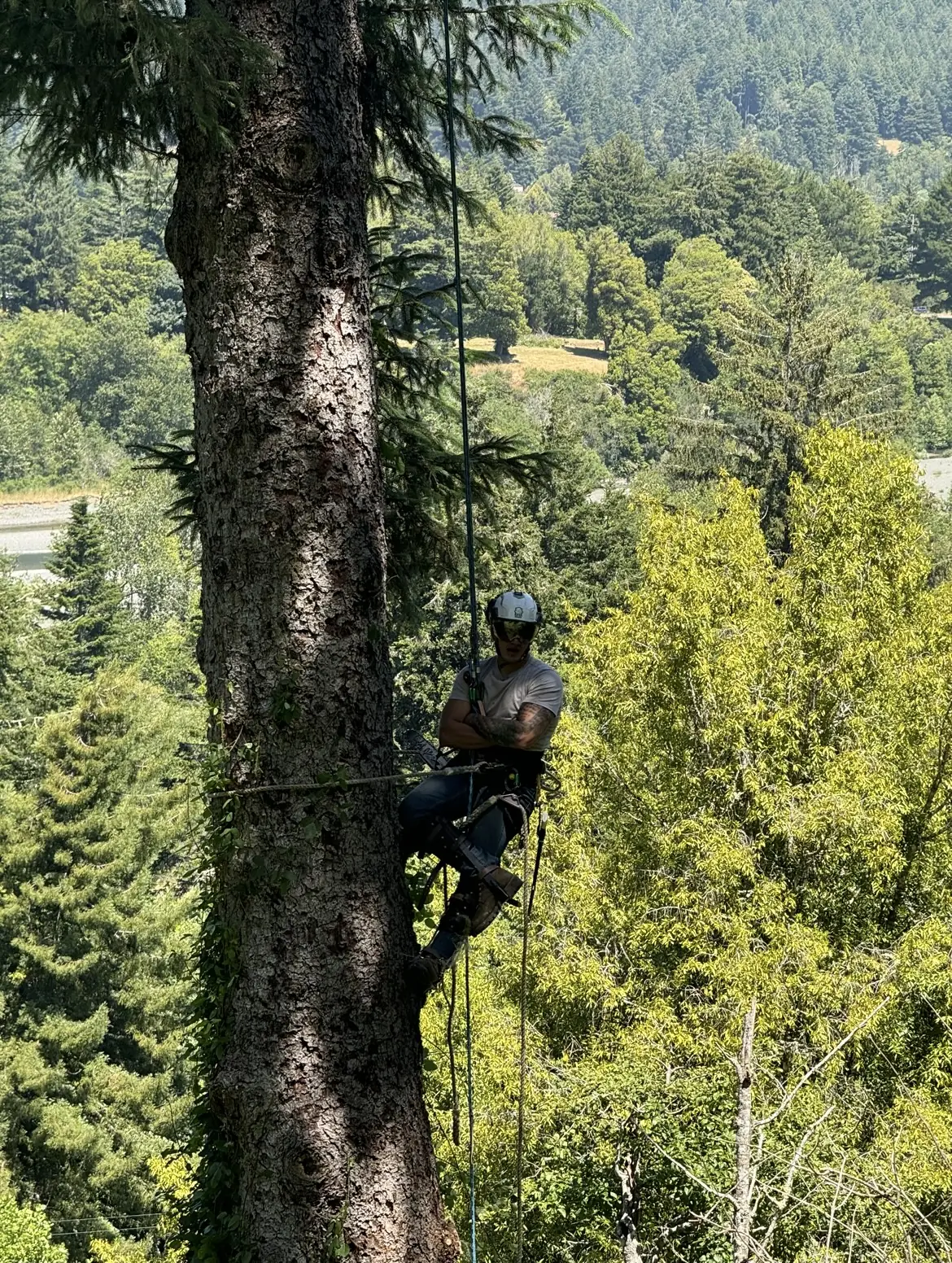
The single most useful thing you can do for an old cypress row is get the dead limbs and the broken hangers out of it. It makes the row safer for anything underneath, and it removes the entry points for decay. This is climbing work on trees this size, and it is best done in late summer or early fall before the storms.
Weight reduction on the leaners
Cypress limbs on the leeward side of a windbreak get long and heavy because they are reaching away from the wind. When one of those limbs is over a barn roof, a road, or a fence line, reducing it back to a good lateral takes the leverage off the union and off the root plate. The tree keeps its shape and its wind protection, and the risk comes down.
Selective removal in the row
When one tree in a row is dead, dying, or structurally gone, taking it out and leaving the rest is normal. What you have to plan for is the gap. The trees on either side are going to take more wind. Sometimes that means reducing their crowns a little at the same time so they are not suddenly a sail. Sometimes it means planting a replacement in the gap, which we can talk about, though a new tree is not going to fill a hundred-foot hole for a long while.
Do not top a windbreak
It is still common to see cypress rows around the valley that were topped at some point, cut flat across at thirty or forty feet to make them shorter. It does not work. Cypress and eucalyptus both respond by sending up a thicket of weakly attached regrowth that is heavier and more dangerous within a few years than the original crown was. If a row is too tall for where it stands, the honest choices are reduction where the structure allows it, or removal. Topping is neither.
When a windbreak tree has to come out
Some trees in an old row cannot be saved, and the honest answer is removal. A cypress with the crown mostly dead and conks at the base. A eucalyptus split down the trunk. A tree that has gone over partway in a storm and is hanging in its neighbors. A tree so big and so close to the house that no amount of trimming makes it safe.
Removing a hundred-foot cypress or eucalyptus next to a Ferndale farmhouse or barn is a serious job, and it is worth understanding how it happens so you can judge whether the crew you hire knows what they are doing.
Felling versus dismantling
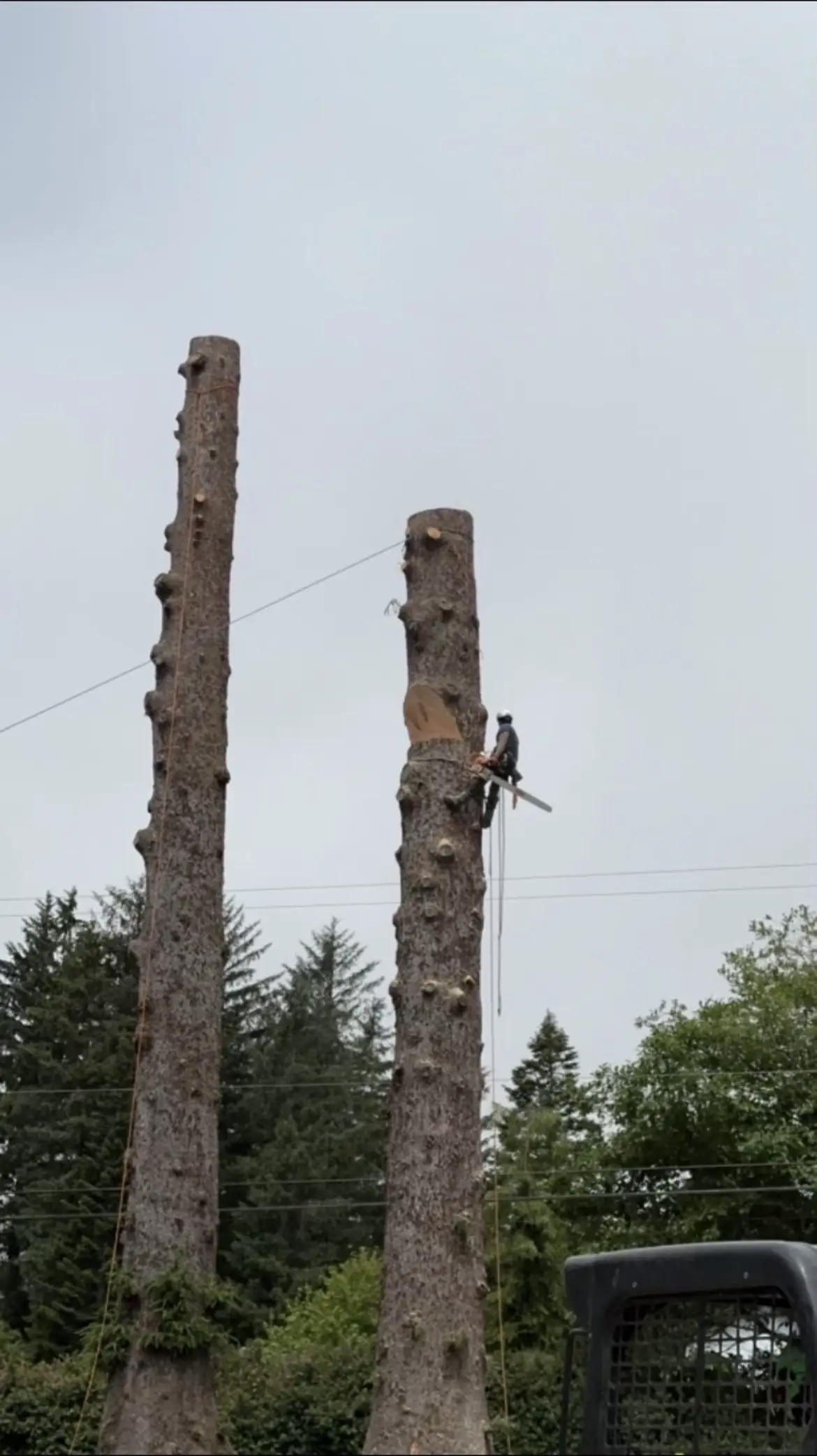
On the open side of a windbreak, out in a field with nothing in the lay, a big cypress can sometimes be felled whole. It is the fastest and cheapest way to take a tree down, and where it is safe we do it. But the trees that worry people are the ones near the house, the barn, the milking parlor, the power drop, or the road, and those cannot be felled. They are dismantled from the top down by a climber, piece by piece, with every piece rigged and lowered when there is something underneath it.
The weight problem
Cypress and eucalyptus are both heavy, and old ones are enormous. A single limb on a mature Monterey cypress can weigh more than a car. That changes the rigging. The pieces get cut smaller, the lowering system is heavier, and the crew is bigger. A company that shows up with a pickup and two guys for a tree like this is not going to do it safely.
Eucalyptus and the bark
Blue gum sheds long strips of bark, and a big one has a deep litter of it around the base that is slick and hides holes and debris. The crew clears that before work starts. The tree itself is also often hollow or partly decayed higher up than you would guess, which the climber has to test as they go. Eucalyptus is also a tree that will sprout back from the stump aggressively, so the stump gets milled down with the grinder or treated after removal unless you want a thicket.
Access, mud, and the farm reality
Ferndale properties are mostly working farms or big rural lots, which is good news for access. We can usually get a chipper and a truck to the tree, and there is usually room to drop and process wood. What makes the valley different is the mud. From the first rains until late spring, the bottoms are soft, and heavy equipment sinks. Big removals go faster and do less damage to a pasture when the soil is firm, which means late summer and early fall are the best time to take out a big windbreak tree. If a tree fails in January and has to come out then, it can, but the plan is different and it usually involves mats or a longer carry.
The wood itself is worth talking about before the day. Cypress makes decent firewood and decent fence posts. Eucalyptus burns hot but splits hard and takes a long time to season. A lot of Ferndale owners want the big wood left in rounds and the brush chipped, and we set the job up that way. Some want everything gone. Either is fine, but say which before we cut, because it changes how the trunk comes down.
Replacing a windbreak
If a row has reached the point where most of the trees are failing, the long-term answer is a replacement windbreak, planted before the old one is gone so there is some protection during the changeover. There are better choices now than there were a century ago: species that grow fast in coastal wind but do not get quite so enormous, or mixed rows that do not all age out at once. That is a planning conversation, not a same-day decision, and we are glad to walk a row with you and talk through it. We do tree planting as well as removal, and a row that is planted with the old one in mind ends up doing the job better.
Ferndale, Fortuna, and Rio Dell: the same trees, the same wind
Everything in this guide applies up and down the lower Eel. Fortuna's older farms and the ranches out toward Rio Dell have the same cypress and eucalyptus rows, planted for the same reasons, reaching the same age. The Fortuna crew handles the valley, and a row assessment is a normal part of what they do. If you are in the valley and have a row you have been watching, that is exactly the call to make in early fall.
The short version
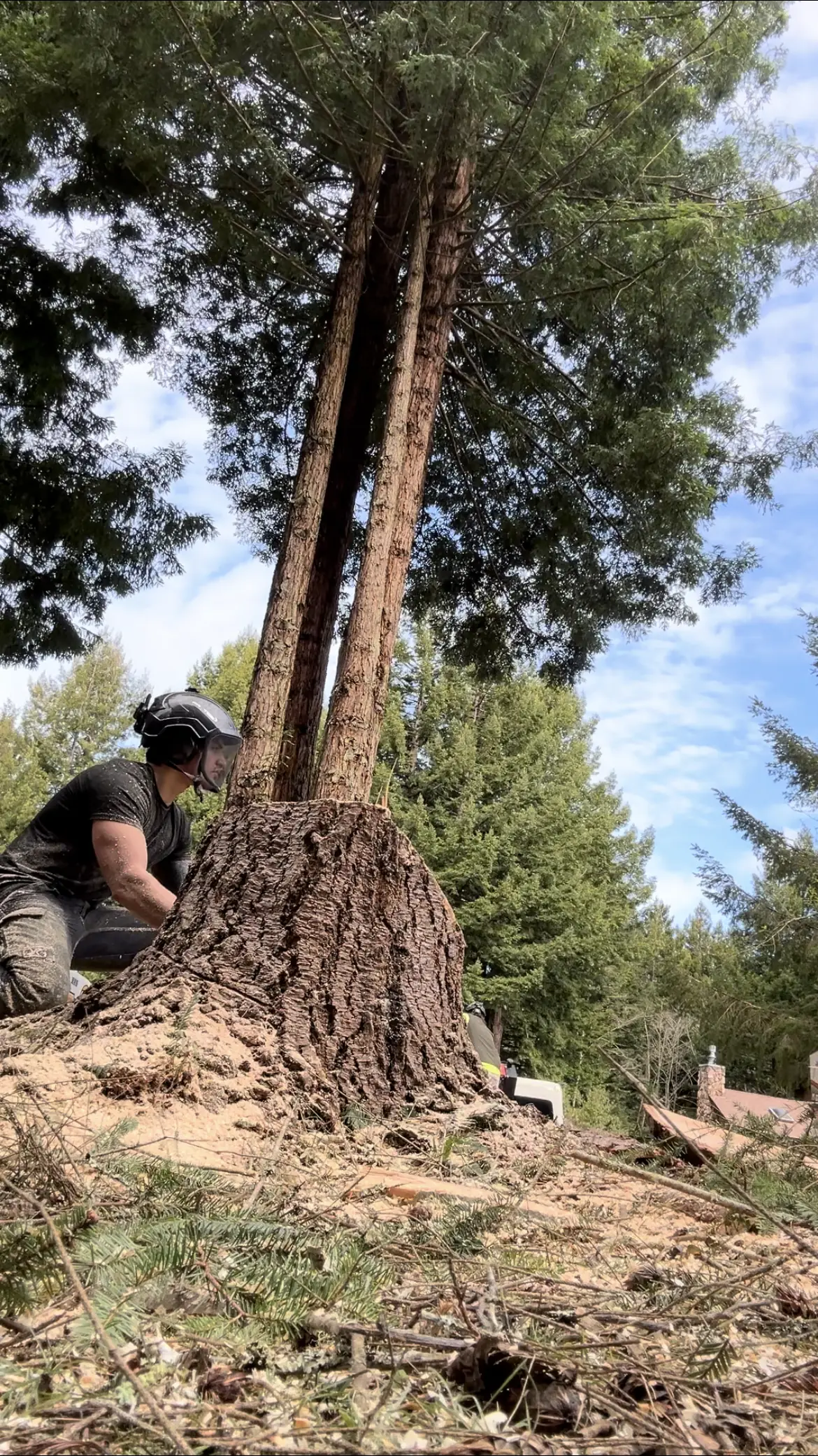
The old cypress and eucalyptus rows around Ferndale are the biggest trees on the property and the ones most likely to fail as they age. Walk the row every late summer. Get deadwood and hangers out, take weight off the leaners over structures, and remove the trees that are done before winter does it for you. Never top a row. When a big one has to come out next to a house or a barn, it gets dismantled by climbers with the rigging sized for the weight, and it goes better on firm soil in fall than in January mud.
Row assessments and quotes are free. Send photos with the quote form, or pick a time on the calendar and an arborist will walk the row with you.