Storm Season in Fortuna and the Eel River Valley: A Homeowner's Tree Checklist
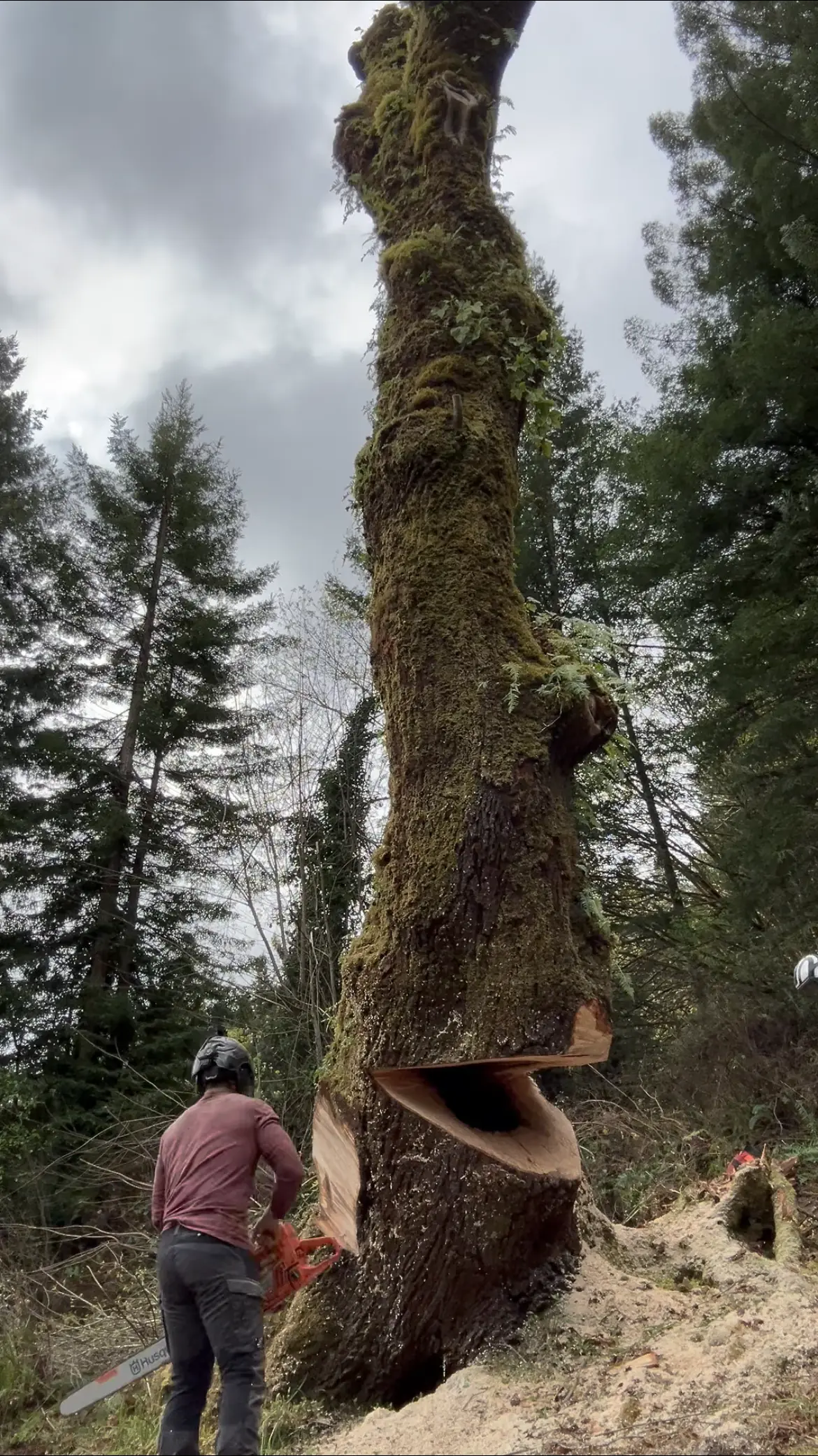
Fortuna sits at the mouth of the Eel River Valley, and the valley is a funnel. When a winter front comes off the Pacific, the wind pushes up the river with nothing much in the way until it reaches the hills behind town, and the trees along that path take the load. Every winter we get calls from Fortuna, Rio Dell, and out toward Ferndale that start the same way: a big fir went over, a cottonwood dropped a limb through the carport, the walnut in the back split down the middle.
Most of those calls could have been a smaller call in October. This guide is the checklist we wish every homeowner in the valley walked through before the first big blow, plus a plain explanation of what happens when a tree does come down, who to call first, and how emergency tree work actually gets scheduled when the whole county is calling at once.
Why the valley is hard on trees
Three things stack up in the Eel River Valley that do not stack up the same way on the coast or in the hills.
The first is the wind itself. The valley lines up with the direction storms arrive from, so the gusts that reach Fortuna have been building over open water and open bottomland. Trees on the edges of town, along the river, and on the ridgelines get hit hardest.
The second is the soil. Once the winter rain starts, the river-valley soil goes soft and stays soft. A tree with a healthy root system holds fine. A tree with root decay, a compromised root plate, or a lean it has been developing for years is a different story. Soft soil plus wind is how whole trees go over with the root ball attached.
The third is the trees themselves. Fortuna's older neighborhoods have a lot of mature Douglas fir and redwood that were planted or left standing when the lots were smaller and the houses were farther apart. Along the river there are cottonwoods and willows, which are fast-growing, brittle, and shed big limbs in wind as a matter of course. In the yards there are walnuts and old fruit trees with heavy, spreading crowns. Each of those fails in its own way, and each has its own fix.
The pre-storm checklist
Walk your property once in early fall, before the first front, and look at each tree with these questions. You do not need to be an arborist to catch the obvious ones. If anything on this list turns up, that is the tree to call about.
- Is the tree leaning, and is the lean new? Compare against what you remember. Look at the soil on the side away from the lean for lifting, cracking, or a gap between the soil and the trunk.
- Is the top dead or brown? On a fir or a redwood, a dead top means the tree is in decline, and dead tops are what break off in wind.
- Are there big dead limbs? Dead limbs on any tree are the first thing to come down in a storm, and in the valley they come down onto whatever is underneath.
- Are there mushrooms, conks, or shelf fungus at the base or on the trunk? Fungus means decay, and decay is why trees go over with the roots attached.
- Are there cracks, seams, or a split where two stems meet? Codominant stems with bark pinched between them are the classic storm failure on walnuts and fruit trees.
- Is the crown crowded and heavy? Overgrown, dense crowns catch wind like a sail. Thinning lets wind pass through.
- What is under it? A tree over the driveway, the bedroom, the power drop, or the neighbor's roof is a higher priority than the same tree over an empty pasture.
- Has it been topped? Trees that were topped in the past have weakly attached regrowth that fails in wind.
If you want, take a couple of photos of anything that worries you and send them with the quote form. That is often enough for us to tell you whether it is a look-now or a look-in-spring situation.
What to do about it in the fall
The fixes are mostly not dramatic, and the cheap ones are the ones done before the weather turns.
Deadwood out
Removing dead limbs from a mature fir, redwood, or walnut is the highest-value work per dollar in storm prep. Dead limbs are going to come down. The only question is whether a climber brings them down onto a tarp on a calm day or the wind brings them down onto your roof at two in the morning.
Weight off and crown thinning
On trees with heavy, overextended limbs, especially cottonwoods and old walnuts, reducing the long limbs back to good laterals takes the leverage out of the wind. Thinning a dense crown lets it breathe. This is careful climbing work, not topping, and the tree should look natural when it is done.
Cabling and bracing
Some trees with a weak union between two stems can be held together with a cable system installed high in the crown. It is not a permanent fix, and it needs to be inspected, but on a tree you want to keep it can buy years.
Removal
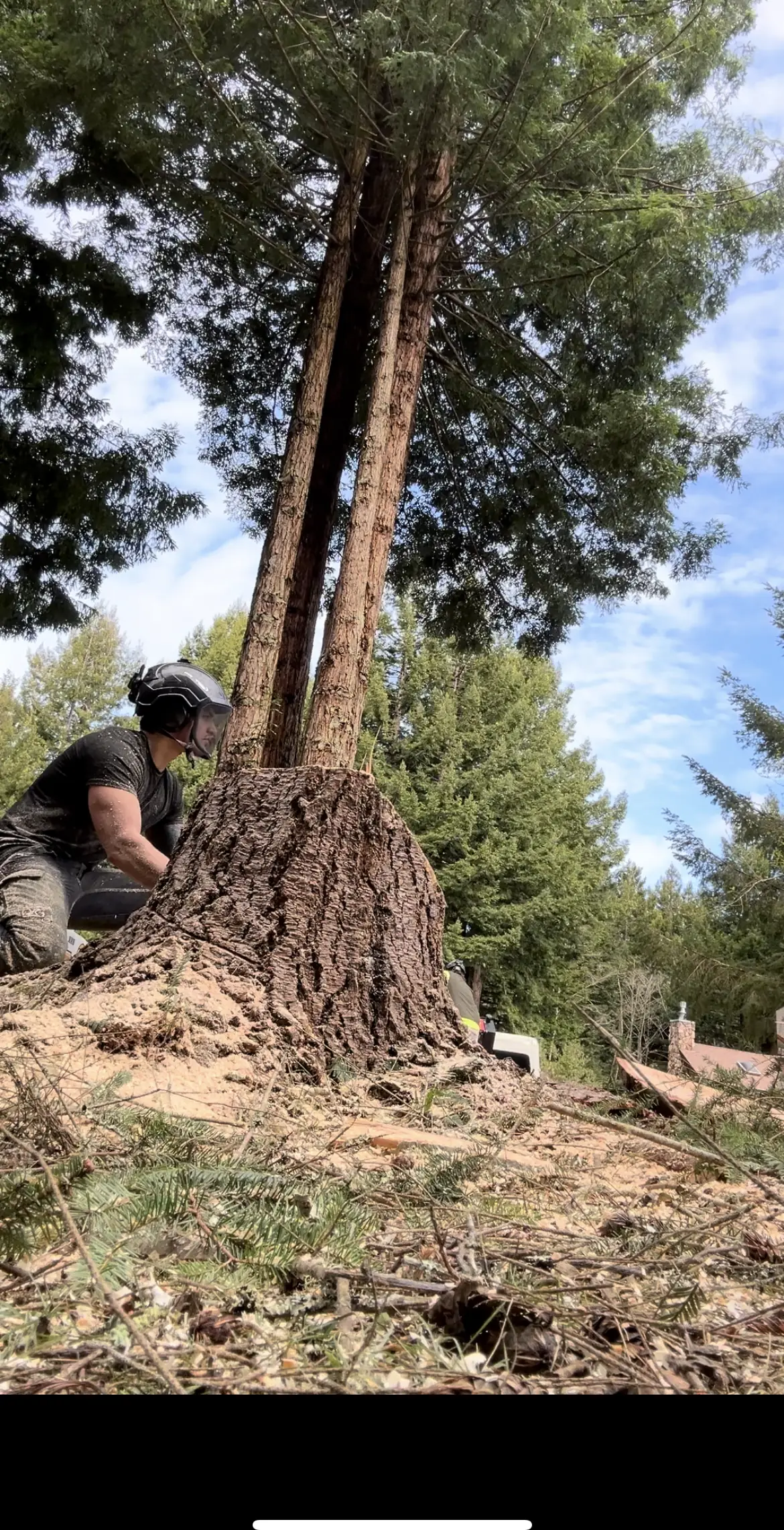
Sometimes the honest answer in fall is that a tree is not going to make it through another winter safely. A fir with a dead top and conks at the base, a cottonwood over the house that has already dropped two big limbs, a walnut split halfway down. Taking a tree like that down in October, on a dry day, with the soil firm and the crew able to work at a normal pace, costs a fraction of what the same tree costs after it is on the house.
When a tree comes down: what to do first
If you are reading this because it already happened, here is the order of operations.
If there are power lines involved in any way, whether the tree is on them, near them, or you are not sure, stay away from the tree and call the utility first. Do not let anyone, including a tree service, touch a tree in contact with lines until the utility has dealt with them. This is the one rule with no exceptions.
If the tree is on the house, get everyone out of the rooms under it. Even if it looks like it has stopped moving, a tree resting on a roof is still loaded and can shift. Then call us and say the words tree on the house. That phrase moves you to the front of the line.
Take photos before anything is moved. Your insurance company will want them, and they are easy to forget in the moment.
Do not try to cut it yourself. A tree lying across a roof or a fence is under tension and compression in ways that are not obvious, and a cut in the wrong place releases that energy at the saw. Storm trees hurt more people than standing trees do. This is what the crew is for.
How emergency tree work actually gets prioritized
After a big front, everybody in the valley calls at once. Here is honestly how we triage it, so you know what to expect.
First: anything involving a person in danger or a structure actively being damaged. A tree on a house with people in it, a tree that has come partway down and is hanging over a road or a driveway someone has to use, a limb through a roof with rain coming in. These get a crew that day, sometimes that hour.
Second: trees that have failed but are stable and are blocking something. A tree across a driveway, a tree down on a fence, a big limb in the yard. These get scheduled in the next day or two.
Third: trees that were damaged in the storm but are still standing. A broken top hanging in the crown, a split limb still attached. These are hazards and they matter, but a tree that survived the storm standing is usually going to stand for the few days it takes to get to it, unless another front is coming.
Fourth: cleanup. Brush, blowdown, the mess in the yard. This waits until the hazards are handled.
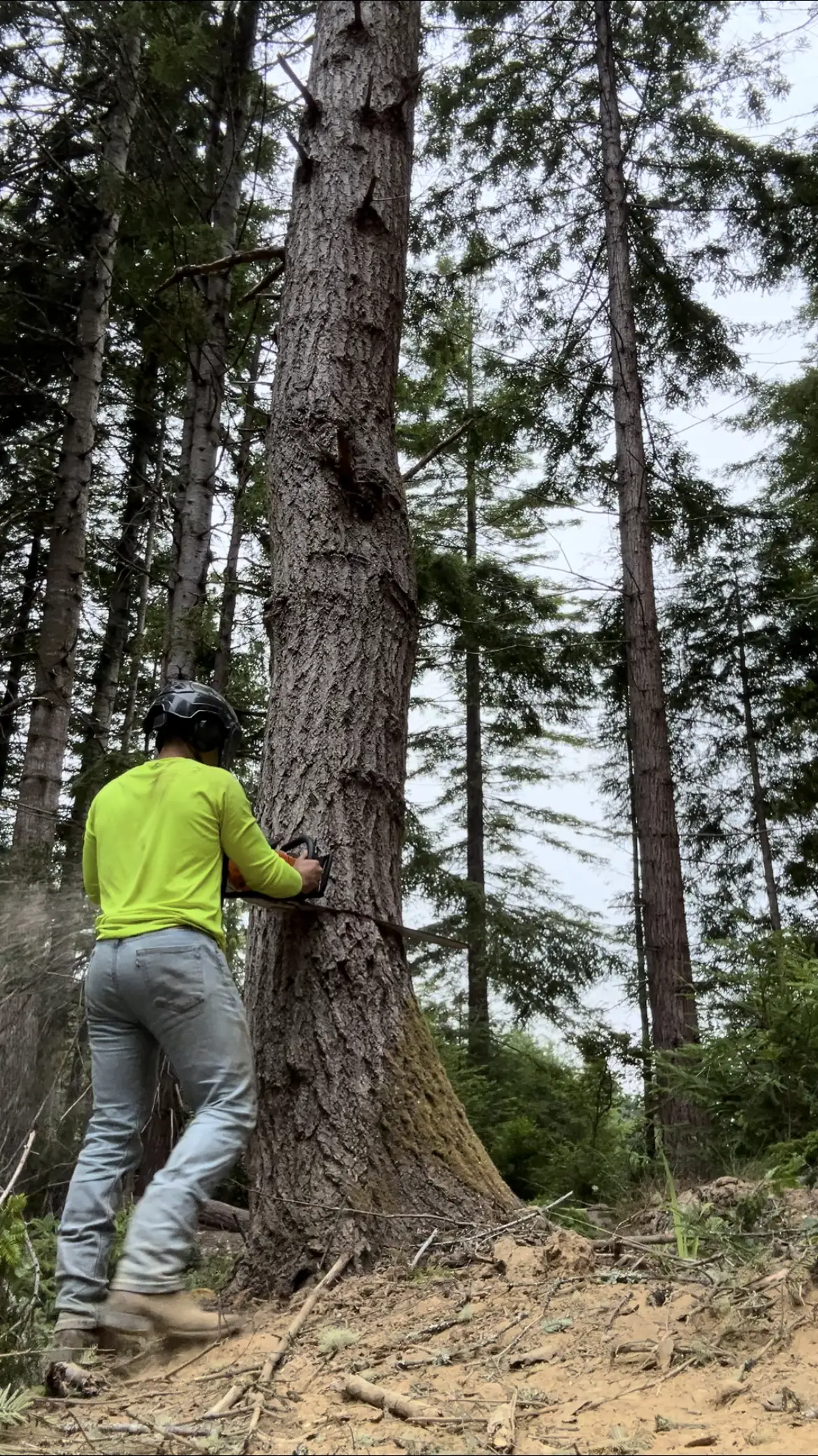
What we do on an emergency call is usually two visits. The first makes the situation safe, which might mean removing the part of the tree that is doing damage, getting weight off a roof, or dropping a hanger. The second, on a normal schedule, finishes the removal and does the cleanup. Splitting it that way gets more people out of danger faster, and it is what we would want done for our own houses.
Cottonwoods and willows along the river
A specific word about the river trees, because they are a specific problem. Cottonwoods grow fast and get huge, and their wood is weak. They drop big limbs in wind as a normal part of being a cottonwood, not as a sign of anything wrong. A mature cottonwood over a house, a barn, or a parking area near the Eel is going to shed onto it eventually.
The choices are to reduce the crown regularly, which is ongoing work on a tree that grows fast, or to accept that it is a tree that belongs in the bottomland and not over a roof, and take it down. We will tell you which we think fits, and if the honest answer is that it needs to go, we will say that too. A lot of the storm-season calls we get in Fortuna are cottonwood limbs, and most of those trees had been dropping limbs for years.
Walnuts, fruit trees, and the split-crown failure
Fortuna's older yards are full of walnuts and fruit trees, and they fail in a particular way. Two or three main stems grow up from a low fork, bark gets trapped in the union between them, the stems get heavy with age, and one winter the union lets go and half the tree lays down. It is loud, it usually takes a fence with it, and it almost always could have been seen coming.
If you have a big walnut or an old fruit tree with a low fork, have someone look at the union. Reducing the weight on the stems, and in some cases cabling them, keeps the tree. If the split has already started, it is a removal, and the sooner the better.
Defensible space is storm prep too
Out toward the hills behind Fortuna and down the valley toward Ferndale, the same work that makes a property safer in fire season makes it safer in storm season. Thinned trees, limbs lifted off the roof, deadwood out, brush cleared from around structures. If you are already doing defensible space work, the storm checklist is mostly done. If you are not, fall is when both jobs happen at once.
The short version for Fortuna
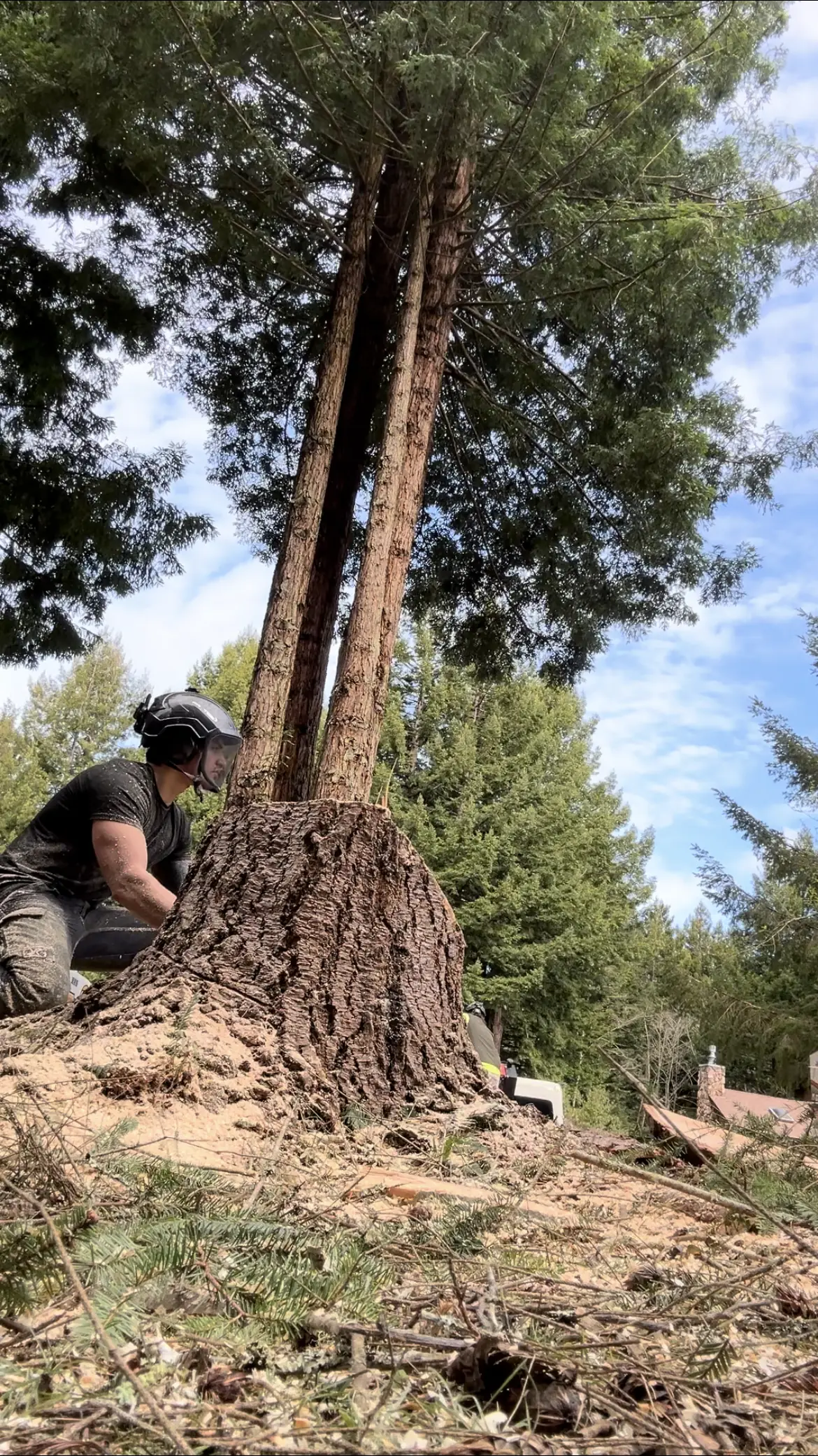
Walk your trees in early fall. Call about anything leaning, dead-topped, fungus-ridden, cracked, or heavy over a target. Get deadwood out and weight off before the first front. If a tree comes down, deal with power lines first, get people out from under it, take photos, and call. Hazard calls go first. And if you have a cottonwood over a roof or a walnut with a low fork, do not wait for the storm to make the decision for you.
Quotes and storm-prep assessments are free. Send the details or pick a time on the calendar and an arborist will come look before the weather does.