Tree Removal in Eureka: Working Around Victorian Lots, Fences, and Close Neighbors
Eureka is a city of old trees and old houses standing close together. The Victorian neighborhoods around Old Town, the Westside, and Henderson Center were planted a long time ago, and a lot of what went in back then is now enormous. Monterey cypress that started as a hedge. Eucalyptus that somebody planted for shade and privacy and never expected to reach a hundred feet. Monterey pine, sycamore, the occasional redwood somebody put in a side yard in the 1950s. When one of those trees dies, leans, or simply outgrows the lot, it has to come down through a space that was never designed for it.
That is the Eureka job in a sentence: big tree, small lot, fences on three sides, a neighbor's roof ten feet away, power and cable lines out front, and a garden the owner has spent twenty years on. This guide walks through how we handle that kind of removal, what you should expect to see happen on the day, and the questions worth asking any tree service before they touch a tree on a city lot like yours.
Why Eureka removals are their own kind of job
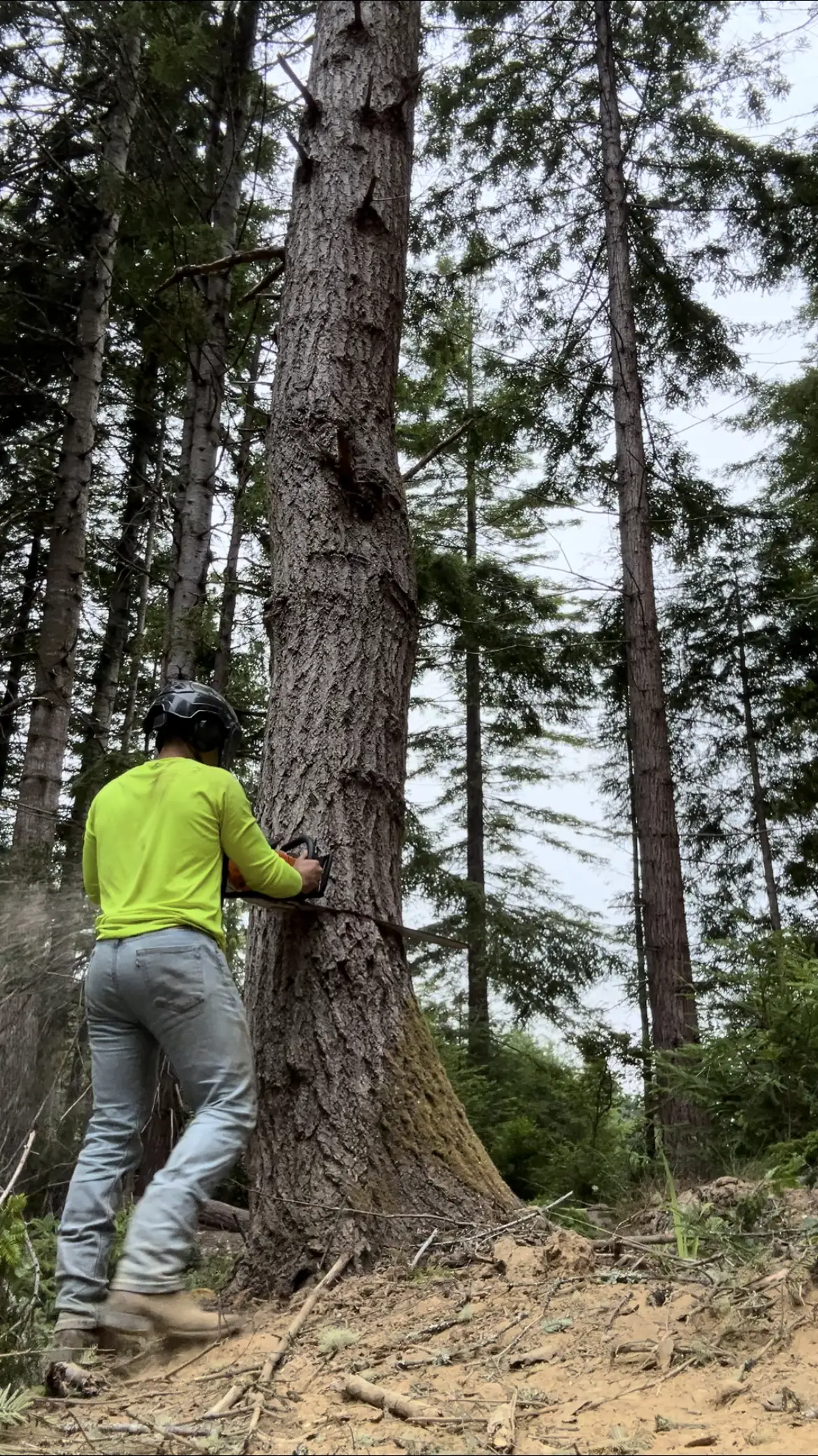
On a rural parcel, a tree can often be felled in one piece. You pick the lay, cut the notch, make the back cut, and the whole tree goes where you aimed it. Then you buck it up on the deck. It is fast and it is cheap, and out in the county we do it all the time.
In Eureka that option almost never exists. There is no open lay. Every direction a tree could fall has something in it: the house, the neighbor's house, a fence, a shed, a greenhouse, a car in the driveway, the street. So the tree has to be taken apart from the top down, piece by piece, with every piece controlled from the moment it is cut until it reaches the crew below. That is a different skill set, a different set of equipment, and a different amount of time.
The second thing that makes Eureka different is the age of the trees. A century-old cypress or eucalyptus is not just tall. It is heavy, it often has internal decay you cannot see from the sidewalk, and it may have been topped or hacked at some point in its life, which means the regrowth on it is weakly attached. A tree like that has to be climbed and rigged with the assumption that parts of it are weaker than they look.
Step one: the assessment, and what we are looking for
Every removal starts with an arborist standing under the tree and reading it. Not a salesman with a clipboard, an arborist. Here is what that person is checking on a typical Eureka lot.
The tree itself
Lean, and whether the lean is new. Cracks and seams in the trunk. Conks, shelf fungus, or mushrooms at the base, which mean decay in the wood or roots. Dead tops and dead limbs. Cavities. Places where two stems meet with bark pinched between them, which is a weak union that can split under load. Old topping cuts with a broom of regrowth on them. Each of these changes how the tree can be safely climbed and where weight can be hung.
The targets
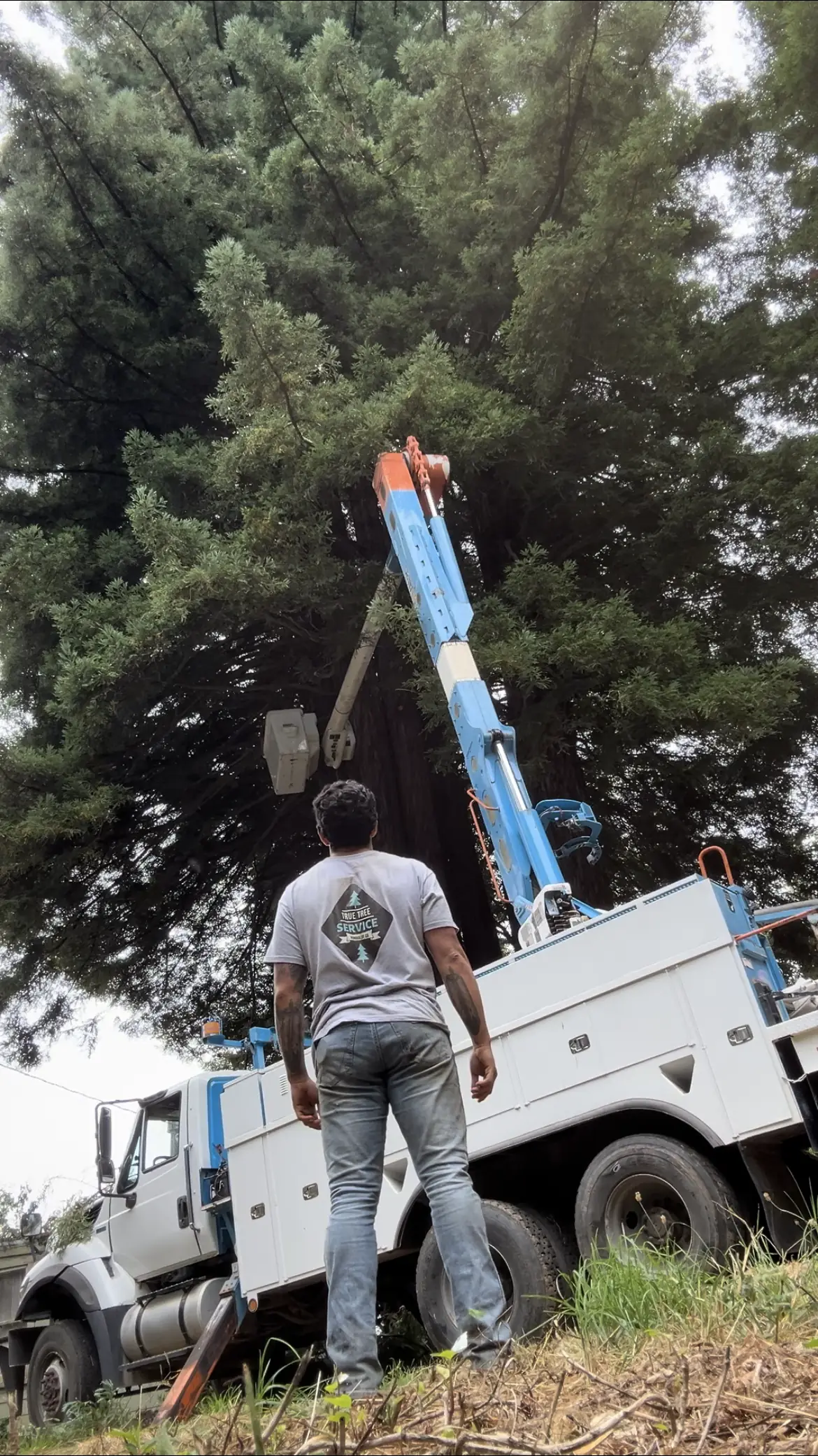
A target is anything the tree or its pieces could hit. On a Eureka lot the list is long: roofs, windows, fences, gates, decks, gardens, greenhouses, hot tubs, vehicles, the sidewalk, the street, overhead lines. We map every one of them because the whole rigging plan is built around keeping wood off of them.
Access
How do we get a chipper and a truck close to the tree? Some Eureka lots have alley access, which is a gift. Many have a four-foot side yard gate and nothing else, which means every piece of that tree gets carried out by hand or moved with a small machine that fits through the gate. Access is the single biggest driver of how long a removal takes, and time is the biggest driver of what it costs.
Utilities
Power drops, communication lines, and service masts are everywhere in the older neighborhoods. If the tree is in the lines, the utility may need to be involved before we can start. If it is near them, the rigging plan keeps every piece well clear. This is not something to guess at.
At the end of the assessment you should get a plain-language explanation of what needs to happen and a firm written number. If a company cannot explain how the tree is coming down, that is a warning sign. Piece-by-piece work is not mysterious. It should be easy to describe.
What a rope-and-lower removal looks like on the day
Here is the sequence on a typical removal over a fence line, so you know what you are watching when the crew shows up.
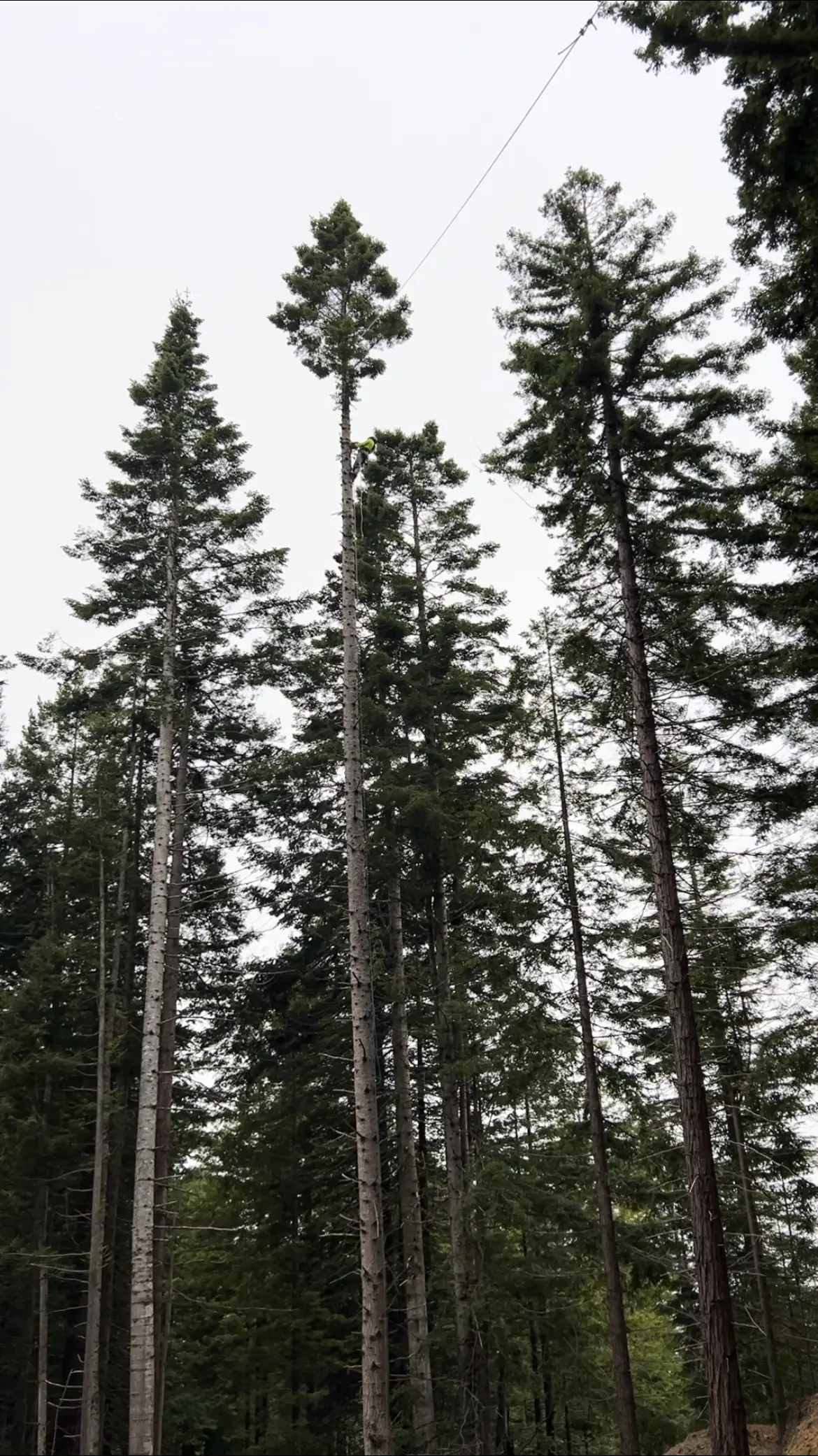
The climber goes up first and sets a rigging point, a strong section of trunk or a heavy limb high in the tree that everything else will be lowered from. Below, the crew below sets up a lowering device on the trunk or a nearby anchor, which is how they control the descent of every piece with friction instead of muscle.
Then the limbs come off, starting with the ones that make the tree hard to move around in and working toward a bare spar. Each limb is tied to the rigging line before it is cut. When it is cut, it swings or drops a controlled distance, the crew below lets rope run through the lowering device to bring it down easy, and it lands where they want it, not where gravity wants it. The piece is unclipped, dragged or carried to the chipper, and the rope goes back up.
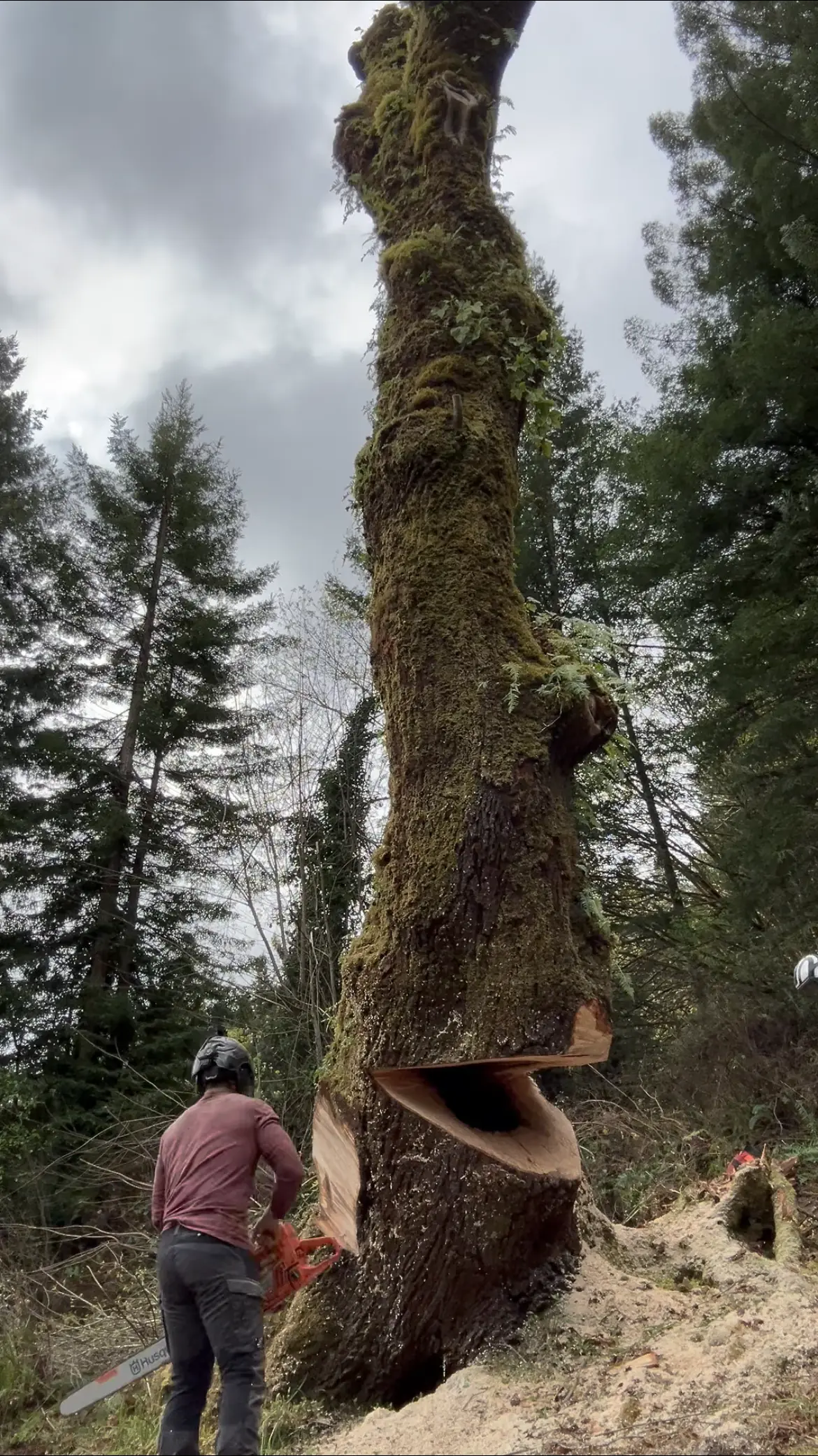
Once the tree is a bare pole, the climber starts taking the trunk down in chunks. On a big cypress or eucalyptus those chunks are heavy, so they are sized for what the rigging and the crew can safely handle. The last few feet are cut at the base, and the stump is left at whatever height you asked for, usually low enough to grind.
A removal like this over fences and a neighbor's yard is slower than an open fall, and it should be. Speed is not the goal. Control is the goal. The measure of a good crew is that when they leave, the only thing that changed on the property is that the tree is gone.
Why we run electric saws in Eureka neighborhoods
One thing you will notice about our crews is that a lot of the morning work happens on battery saws. Part of that is preference. Part of it is that in a neighborhood where the houses are eight feet apart, a gas saw screaming at seven in the morning makes enemies out of neighbors, and we are going to be working beside those neighbors all day.
Electric saws are quiet, they do not fill a side yard with exhaust, and for limbing and most of the top-down work they cut just as well. When we get to the big wood at the base of a cypress trunk, a gas saw comes out, but by then it is midday and the loud part is short. Homeowners tell us this matters more than they expected.
Permits, protected trees, and the honest answer
People ask us whether they need permission to remove a tree in Eureka. The honest answer is that it depends on where the tree is and what kind it is, and the rules can change. Trees in the public right of way, meaning the strip between the sidewalk and the street, are generally treated differently from trees in your yard. Some cities also have rules about specific species or sizes.
We are not going to pretend to be the city on this. What we do is tell you when a tree looks like it could fall under a rule, point you at the right office to ask, and help with the paperwork if there is any. If you want to be sure before you spend money, call the City of Eureka and ask about the tree at your address. It takes ten minutes and it saves surprises.
What happens to the wood
This is the part homeowners forget to think about until the tree is on the deck. A mature Eureka tree is a lot of material. Here are the choices.
- Chip and haul: brush and small wood go through the chipper into the truck and leave with us. This is the default and the cleanest result.
- Chip and leave the mulch: same, but the chips stay on your property for garden beds and paths. Free mulch if you have a place to put it.
- Buck the trunk into firewood rounds and leave them: good if you burn wood. Rounds from a big cypress or eucalyptus are heavy and take a while to season.
- Leave millable logs long: on the rare Eureka lot where a redwood or fir has to come down and there is a way to get logs out, we can leave them long for a mill. Tell us before the day, because it changes how the trunk is cut.
- Full haul-out: everything gone, including the big wood. The most work, the cleanest yard.
Whatever you choose, the site gets raked. Sawdust, twigs, and rope marks in the lawn are the last thing our crew deals with before the truck pulls away.
Stumps: grind it, or leave it
Most Eureka removals end with a stump grinding, because on a small lot a stump is in the way of everything. Grinding takes the stump down well below the surface, the chips get raked back into the hole or hauled, and you can plant over it or lay lawn.
A few people choose to leave the stump low for a season and grind it later, which is fine. What we do not recommend is leaving a big cypress or eucalyptus stump to rot on its own. It takes years, it attracts fungus, and eucalyptus in particular will try to sprout from the stump for a long time.
Questions to ask any tree service before they start
You do not need to be an arborist to hire one well. Ask these and listen for straight answers.
- Are you licensed and insured, and can I see it? Tree work on a city lot is high-risk work. If someone gets hurt or a fence comes down, the insurance is what protects you. Our license is on every page of this site.
- How exactly is the tree coming down? Fell it, or rig it piece by piece? If they say fell it and you can see a house in every direction, keep asking.
- Who is doing the climbing? Your own crew, or a subcontractor? We climb our own jobs.
- What is the plan for my fence, my garden, and the neighbor's roof? A good answer names each one.
- What happens to the wood, and is the cleanup included?
- Is the number firm? A free quote should be a firm quote, not a starting point.
When a tree does not need to come down
We should say this plainly because it is true and because it is not what every tree company will tell you. Some trees that look scary are fine. A big cypress with a permanent lean it has had for fifty years, with a healthy root plate and no decay, is often fine. A eucalyptus that drops bark every summer is doing what eucalyptus does. A tree with a few dead limbs needs the dead limbs off, not the whole tree.
When the honest answer is trimming, cabling, or leaving it alone, that is what we tell you. Removal is the most expensive and the most permanent thing we do, so it should be the last option, not the first pitch. If you want a second opinion on a tree somebody else has told you to remove, that is a normal request and we are glad to give it.
Emergency removals after a storm
Winter storms off the bay put trees on houses in Eureka every year. If you have a tree down on a structure or hanging over one, call and say it is an emergency. Hazard calls jump the schedule. We will make the tree safe first, which sometimes means removing the part that is doing damage and coming back for the rest when the weather clears, and we will tell you straight what can wait and what cannot.
The short version
Tree removal in Eureka means taking big old trees down through small old lots without touching anything around them. It starts with an honest assessment, it happens piece by piece on ropes, it uses quiet saws where the neighbors are close, it ends with a raked site and a plan for the stump. If you have a tree on your Eureka property you have been watching, send us the details or pick a time on the calendar and an arborist will come look. The quote is free, the number is firm, and if the tree does not need to come down, we will say so.