Pruning Fruit Trees and Ornamentals in Fortuna and Ferndale: Apples, Plums, Japanese Maples, and the Old Walnuts
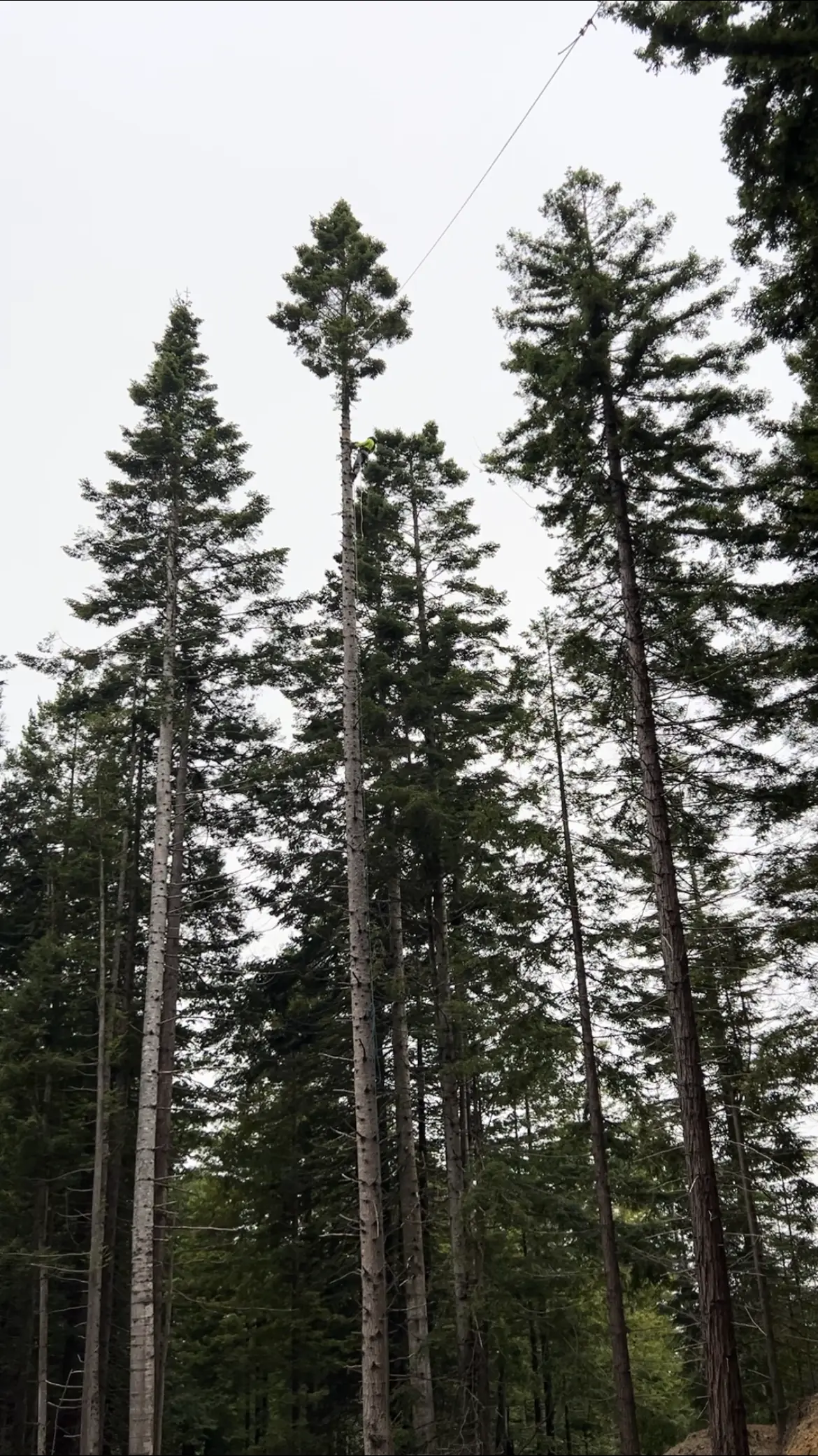
The Eel River Valley grows fruit better than anywhere else on the North Coast. Fortuna and Ferndale sit far enough inland to get real summer warmth, close enough to the ocean to skip the hard freezes, and on river soil that trees love. That is why so many of the older properties in the valley have an apple tree or two in the back, a plum by the fence, a fig, and out on the farms, old orchard rows and walnuts that were planted when the dairy was.
It is also why we get so many calls about fruit trees that have gone feral. A tree that was pruned every winter for thirty years and then left alone for fifteen turns into a thicket of upright shoots, crossing limbs, and dead wood that produces small fruit high up where nobody can reach it. This guide covers how to bring a tree like that back, how to keep a good tree good, when to do it, and how ornamental trees like Japanese maples and flowering cherries are a different job entirely.
Why pruning matters more here than you would think
Fruit trees in a wet climate have two problems that trees in a dry one do not. The first is disease. Apple scab, peach leaf curl, brown rot on plums and cherries, and a range of cankers all thrive in the damp, still air of a crowded canopy. Opening the tree up so air and light move through it is the single best thing you can do for disease without spraying. The second is weight. The valley's long growing season means trees put on a lot of wood, and a tree with too many limbs and too much fruit at the ends will break itself. Every winter we take apart old apple and plum trees that split under their own crop.
So pruning here is not cosmetic. It is the difference between a tree that produces clean fruit for fifty years and one that rots, splits, and comes out.
When to prune: the valley calendar
Most fruit trees are pruned in the dormant season, between when the leaves drop and when the buds start to swell. In Fortuna and Ferndale that window runs from roughly December through February. Dormant pruning is when structural cuts get made: removing big limbs, opening the center, shortening leaders.
There are exceptions worth knowing.
- Stone fruit, meaning plums, cherries, peaches, and apricots, are better pruned in late summer after harvest in a wet climate, because fresh cuts in the rainy season are an open door for canker and silver leaf. If a plum needs big work, we lean toward August or early September.
- Apples and pears are fine in winter. They are tough, and dormant cuts on them seal well.
- Figs are pruned in late winter, after the worst cold, and they bleed if you cut them in spring.
- Walnuts bleed heavily if cut in late winter or spring. Summer, after the leaves are fully out, is when they get worked on.
- Summer pruning in general, taking off the vigorous upright shoots in July, slows a tree down and keeps it in bounds. Winter pruning does the opposite; it invigorates. A tree that is too big and too vigorous needs more summer work, not more winter work.
Bringing back a neglected tree
The most common call in the valley is some version of: this apple has not been pruned since we bought the place, it is thirty feet tall, and the fruit is tiny. Here is how that goes.
The first thing to know is that it is a three-year job, not a one-afternoon job. A tree that has grown wild for a long time cannot have half its canopy removed at once without responding by throwing a forest of water sprouts and, on an older tree, sometimes going into decline. The rule most arborists use is to take no more than about a quarter of the live canopy in any one year.
Year one is about the obvious things: dead wood, broken limbs, limbs that cross and rub, and the worst of the crowding in the center. If the tree is far too tall, the tallest leaders get shortened back to a good lateral, not cut flat. Already the tree looks better and lets light in.
Year two takes the height down further and starts to reestablish a structure of well-spaced main limbs. The water sprouts that came up after year one get thinned to the few that are in useful places.
Year three finishes the shape and the tree is back on a normal annual pruning schedule. By then the fruit is bigger, lower, and cleaner, and the tree has stopped fighting you.
Some old trees are too far gone. A trunk that is mostly hollow, a main limb split from the crown, a canker that has girdled the base. When that is the case we say so, and we talk about whether to keep the tree for a few more years anyway or replace it. A new tree planted well, in the valley's climate, is bearing usefully in four or five years.
The basic shape we are aiming for
For apples and pears in this climate, the target is a central leader or a modified leader: one main trunk with tiers of well-spaced scaffold limbs coming off it, the lower ones longer, the upper ones shorter, so the tree is roughly pyramid-shaped and light reaches every limb. For plums, cherries, and peaches, it is usually an open center: three or four main scaffolds coming off a short trunk, spreading outward, with the middle kept open like a bowl. That shape dries fast after rain and is easy to pick.
Whatever the shape, the cuts follow the same rules. Cut to a bud or a lateral that faces the direction you want growth to go, usually outward. Cut just outside the collar, never flush and never leaving a stub. Do not paint the cuts; wound dressing traps moisture and the tree seals better without it. And make fewer, better cuts rather than many small ones.
Walnuts
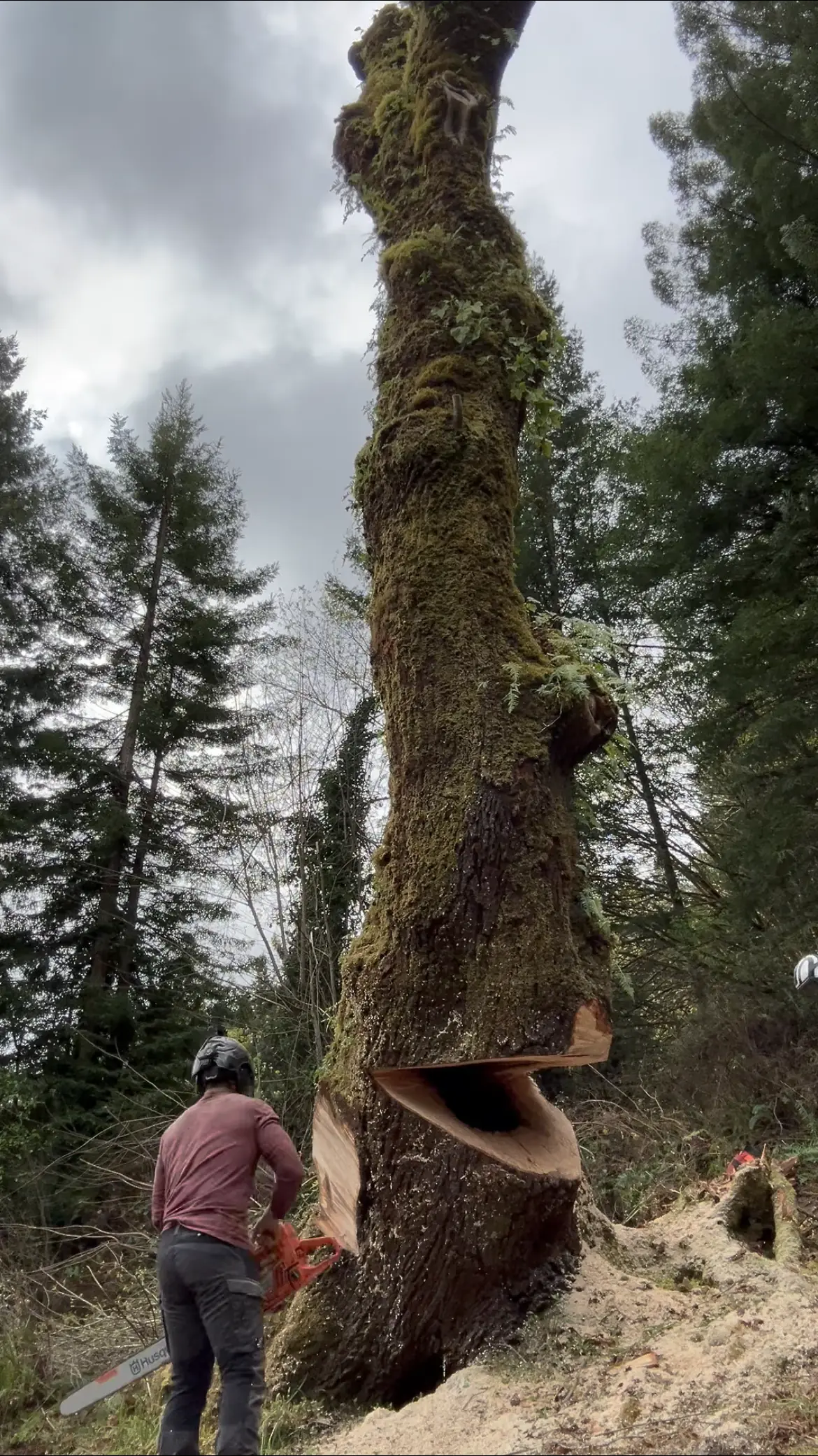
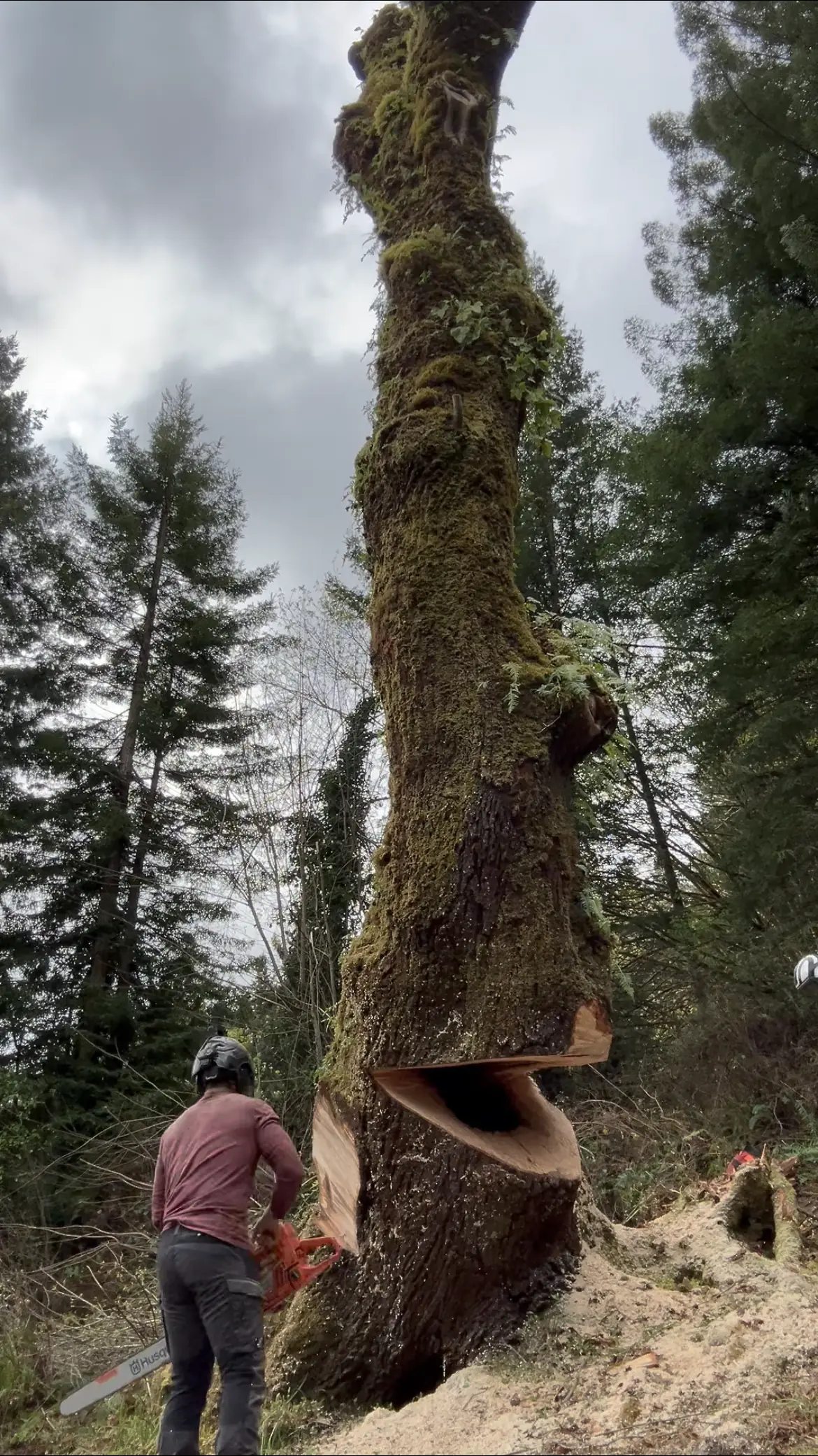
The old English walnuts on valley farms deserve their own section because they are big trees, not fruit bushes, and people get hurt trying to prune them from a ladder. A mature walnut in Fortuna can be sixty feet tall with limbs the size of a normal tree's trunk. They are prone to a specific failure where two or three main stems meet at a low fork with bark trapped in the union, and one winter the union splits.
Walnut work is arborist work: climbing or a bucket, deadwood out, weight off the long limbs, and a hard look at the unions. It happens in summer, after leaf-out, so the tree does not bleed. If a walnut over the house or the barn has never been assessed, that is a call worth making before the next storm season.
Ornamentals: a different job
Japanese maples, flowering cherries and plums, dogwoods, magnolias, crabapples, and the dozens of other ornamental trees in Fortuna and Ferndale yards are pruned for structure and appearance rather than fruit, and the approach changes.
Japanese maples
The most common ornamental we work on, and the most commonly ruined. A Japanese maple should be pruned lightly and rarely: dead wood, crossing branches, and a little thinning to reveal the layered structure, done in late summer or in the dormant season. They should never be sheared, topped, or cut back hard. A maple that has been hacked takes years to recover its shape, if it ever does.
Flowering cherries and plums
These bloom on last year's wood, so pruning right after flowering keeps the show for next year. They are also stone fruit, with all the canker problems that come with cuts in wet weather, so summer after bloom is the window. Keep cuts small and few.
Magnolias, dogwoods, and the rest
Most of these want the same thing: minimal pruning, dead wood out, structure corrected while the tree is young, and otherwise left alone. The biggest service we do for ornamentals is often telling someone not to prune the tree at all this year.
Hedges and screens
Laurel, privet, escallonia, and the big pittosporum hedges around Ferndale yards are a shearing job, and the timing is spring and again in late summer. Overgrown hedges can be cut back hard, unlike ornamental trees, and most of them recover. If a hedge has gotten bigger than a hedge should be, we can take it down in stages.
Fruit trees near the coast: Eureka and the bay
Everything above applies in Eureka, with one difference. The coastal fog belt gives fruit trees less summer heat and more disease pressure, so apples and figs do well, stone fruit struggles, and the pruning emphasis leans even harder toward opening the canopy so it dries. Eureka's older Victorian lots have some remarkable old apple and pear trees behind the houses, and they respond to the same three-year restoration.
Clean tools and the disease question
One thing worth knowing if you prune your own trees between our visits: in a wet climate, dirty tools spread disease from tree to tree. Cankers on plums and cherries, fire blight on apples and pears, and several fungal problems move on the blades of a pruning saw. Wipe the blades with alcohol between trees, and between cuts if you are removing anything that looks infected. Cut infected wood well back into healthy tissue, and get it off the property or burn it rather than leaving it under the tree.
The other habit that helps is cleaning up under the tree. Fallen fruit, old leaves, and mummified plums left on the branches or on the soil carry brown rot and scab through the winter into next spring. Raking them up and getting them out of the orchard is not glamorous, and it is one of the cheapest ways to have cleaner fruit next year. When we do a restoration pruning we do the cleanup underneath as part of it, because a tree that has been opened up and then left standing in last year's rot is only half fixed.
What it costs, and what changes the number
Pruning is quoted by the tree and by what the tree needs. A small, well-kept apple is a quick job. A thirty-foot neglected apple that needs a year-one restoration is a half-day with a climber. A big walnut is arborist work with rigging. Ornamental pruning is usually priced by the hour because it is slow, careful work. Hedges are priced by the length and height.
If you have a lot of fruit trees, tell us. An orchard day, where the crew works through a row of trees at once, is much cheaper per tree than doing them one at a time. And if pruning is bundled with other work, like a removal or a defensible space job, the trip is already paid for.
The short version
Prune apples and pears in the dormant season and stone fruit in late summer after harvest. Bring back a neglected tree over three years, never all at once. Aim for an open, well-spaced structure that dries fast and lets light in. Leave Japanese maples and most ornamentals mostly alone. Get walnuts assessed by an arborist in summer. And if the tree is too far gone, a new one in valley soil is bearing in a few years.
Quotes are free. Send a photo of the tree or the orchard with the quote form, or pick a time on the calendar and an arborist will come look.