Defensible Space in the Hills Above Fortuna and Ferndale: What to Cut, What to Keep, and When
The Eel River bottoms are damp most of the year, and it is easy to think of Fortuna and Ferndale as places where fire is somebody else's problem. Then you drive up out of town, up Rohnerville Road or the Wildcat or any of the ranch roads that climb out of the valley, and within ten minutes you are in oak woodland, dense fir, and thick brush on slopes that dry out hard every August and September. That is where a growing number of people in the valley live, and it is where defensible space stops being a slogan and starts being the reason a house is still there.
This guide is written for those properties: the rural lots and ranches on the ridges above Fortuna, Ferndale, Rio Dell, and Scotia. It walks through what defensible space actually means in practice, zone by zone, which trees to keep and which to remove, how the work gets done with a crew and a chipper, and when in the year to do it. It is not a substitute for what your local fire authority tells you about your specific parcel, but it will make that conversation a lot shorter.
What defensible space is, in one paragraph
Defensible space is the area around a structure where vegetation has been managed so that a fire approaching the house slows down, drops from the tree crowns to the surface, and gives firefighters a place to work. It is not a bare dirt ring. Done right, a property with good defensible space still has big trees and looks like a place someone lives. The difference is in what is missing: the ladder of brush and low limbs that carries fire from the surface into the canopy, the dead material that burns hot, and the continuous fuel that lets fire move without interruption.
The zones around the house
California's guidance divides the property into zones by distance from the structure. The details get updated, so check the current requirements for your area, but the logic has stayed the same for years and it is what a crew works from.
Zone 0: the first five feet
The five feet right against the house, deck, and any attached structure should have nothing in it that burns easily. That means no bark mulch against the siding, no woody shrubs under the eaves, no firewood stacked against the wall, no dead leaves in the corners. Trees do not get planted here, and limbs from nearby trees should not hang over the roof. This zone is mostly about the homeowner: gutters, mulch choice, what is stored on the deck. Our part is the limbs.
Zone 1: five to thirty feet
This is the lean and green zone. Trees can stay, but their limbs are lifted up off the surface, typically six to ten feet, so a surface fire cannot climb them. Dead trees and dead limbs come out. Shrubs are spaced apart from each other and from the trees so fire cannot jump from one to the next. Woodpiles, propane tanks, and outbuildings get their own clear space. This is the zone where most of a crew's time goes, and where the biggest difference is made.
Zone 2: thirty to one hundred feet, or to the property line
Out here the goal is to reduce and break up the fuel rather than eliminate it. Trees are thinned so the crowns are not touching, limbs are lifted, dead material is removed, and brush is cut back so there are gaps. On a steep slope the distances get bigger, because fire moves faster uphill. On the ridges above Fortuna a lot of houses sit at the top of a slope, which means the downhill side needs the most work.
Which trees to keep
People sometimes assume defensible space means clearing the trees. It does not, and on the North Coast it should not. Big, healthy, well-spaced trees with their lower limbs lifted are not the problem. Here is how we think about the species on the hills above the valley.
- Oaks. The Oregon white oak and tanoak on the ridges are worth keeping where they are healthy. Oaks with the dead limbs out and the brush cleared under them are relatively fire-resistant and they hold the slope. Tanoak that is dead or dying from sudden oak death is a different story and comes out.
- Douglas fir. Big firs with thick bark and high crowns are keepers. Young firs growing thick under bigger trees are ladder fuel and get thinned hard. Dead firs, and there are more of them every year, come out.
- Redwood. Redwood is about as fire-tolerant as a tree gets, with thick bark and no resin. Keep them, lift the limbs, clear the duff back from the base.
- Madrone and bay laurel. Both burn hot. Bay especially, because of the oils in the leaves. They are not automatic removals, but bay laurel growing thick near a house is one of the first things to thin.
- Brush: coyote brush, manzanita, ceanothus, blackberry, scotch broom. This is the fuel. Broom and blackberry are removed outright. Manzanita and ceanothus are cut back and spaced. Coyote brush near a structure goes.
- Eucalyptus. If there is eucalyptus on the property near the house, it is the highest priority removal on the list. The bark and litter it drops are the most flammable material on any North Coast lot.
How the work actually happens
A defensible space job on a rural parcel above Fortuna or Ferndale is a crew, a chipper, saws, and a plan. Here is what it looks like.
The first visit is a walk with an arborist. We mark the trees that are coming out, the trees that are getting limbed, the brush that is going, and the brush that is staying. We look at the slope and where the wind comes from. We talk about what you want the place to look like after, because there are choices, and a crew that just clears everything is not doing you a favor.
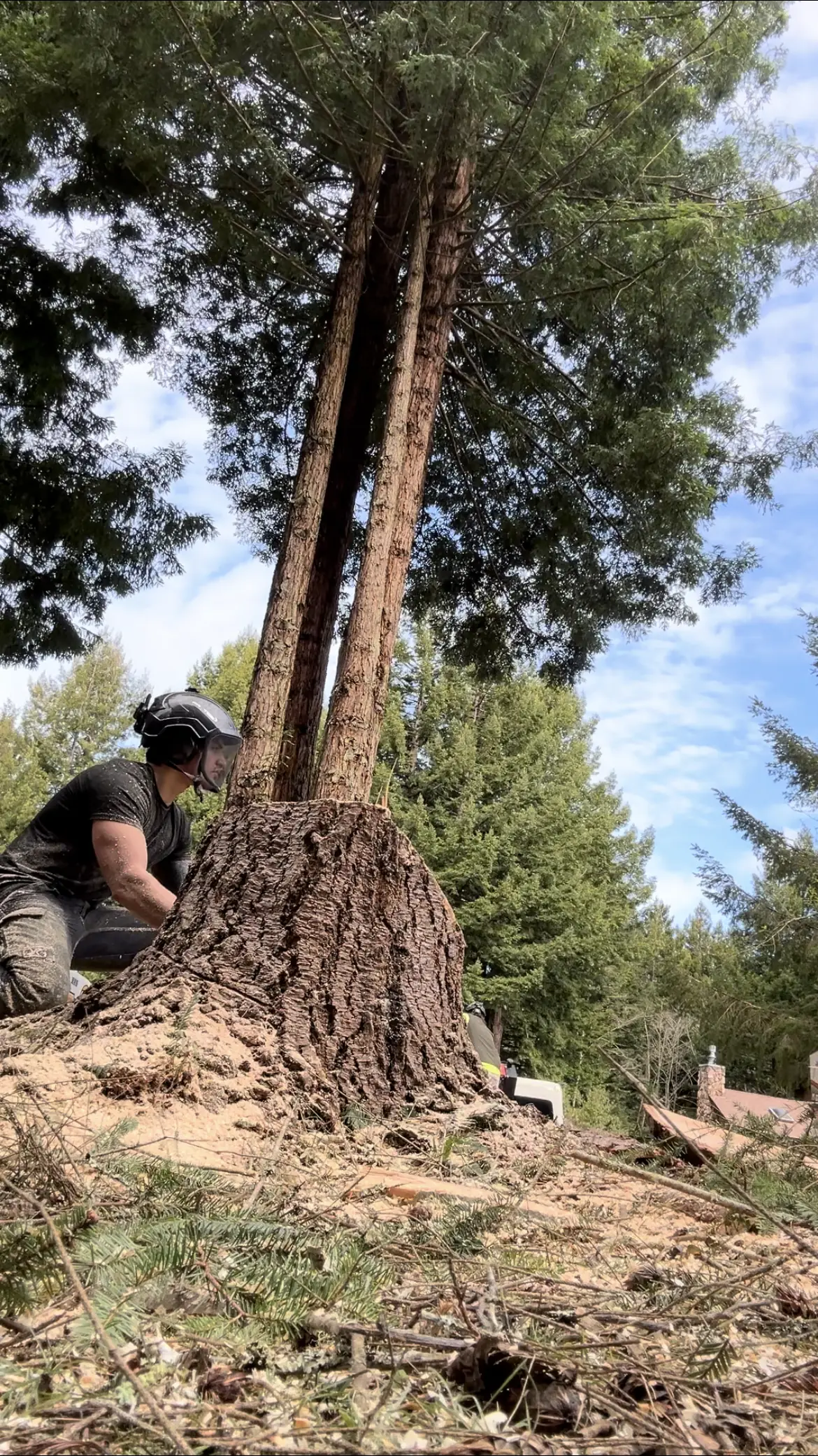
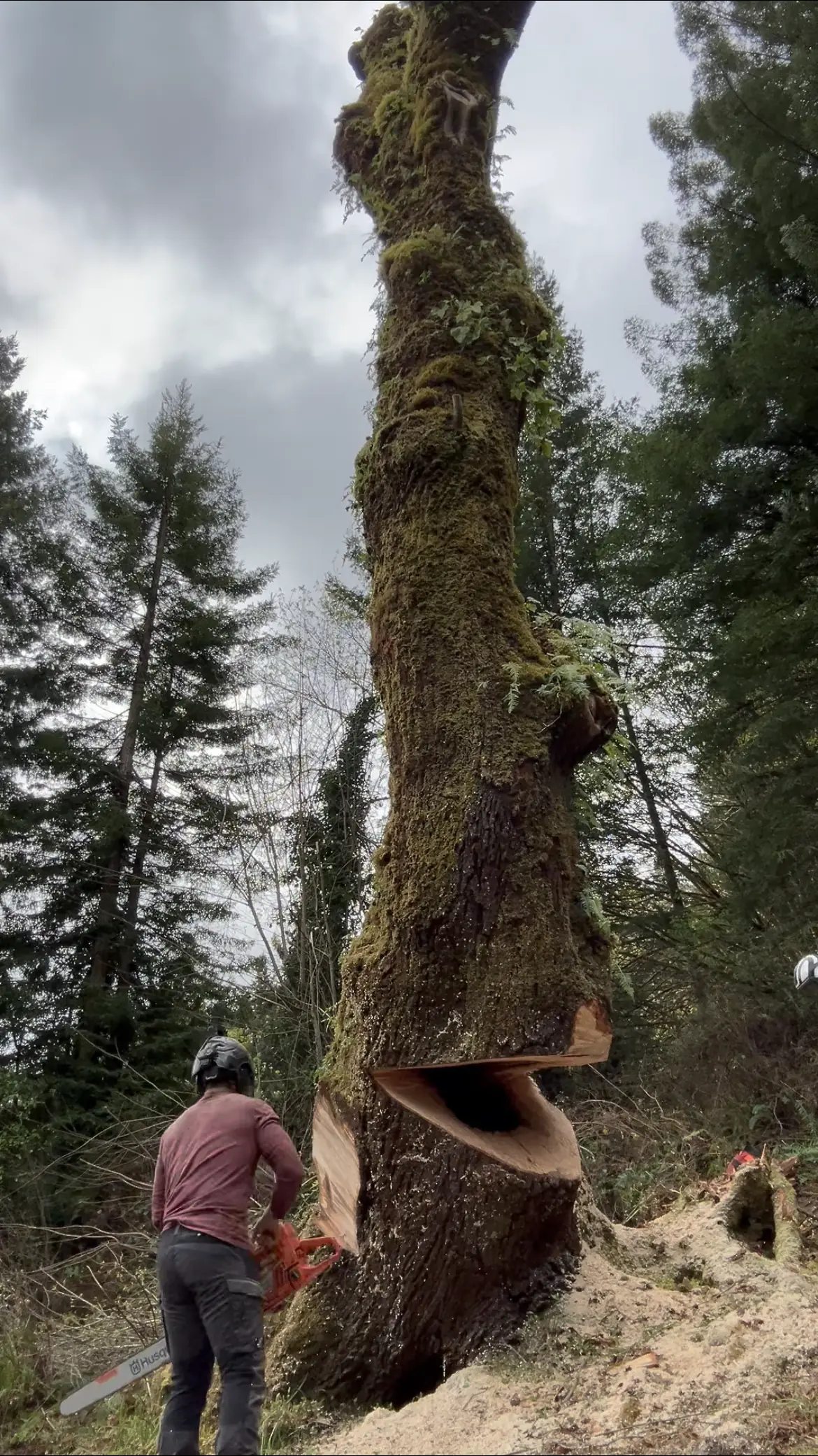
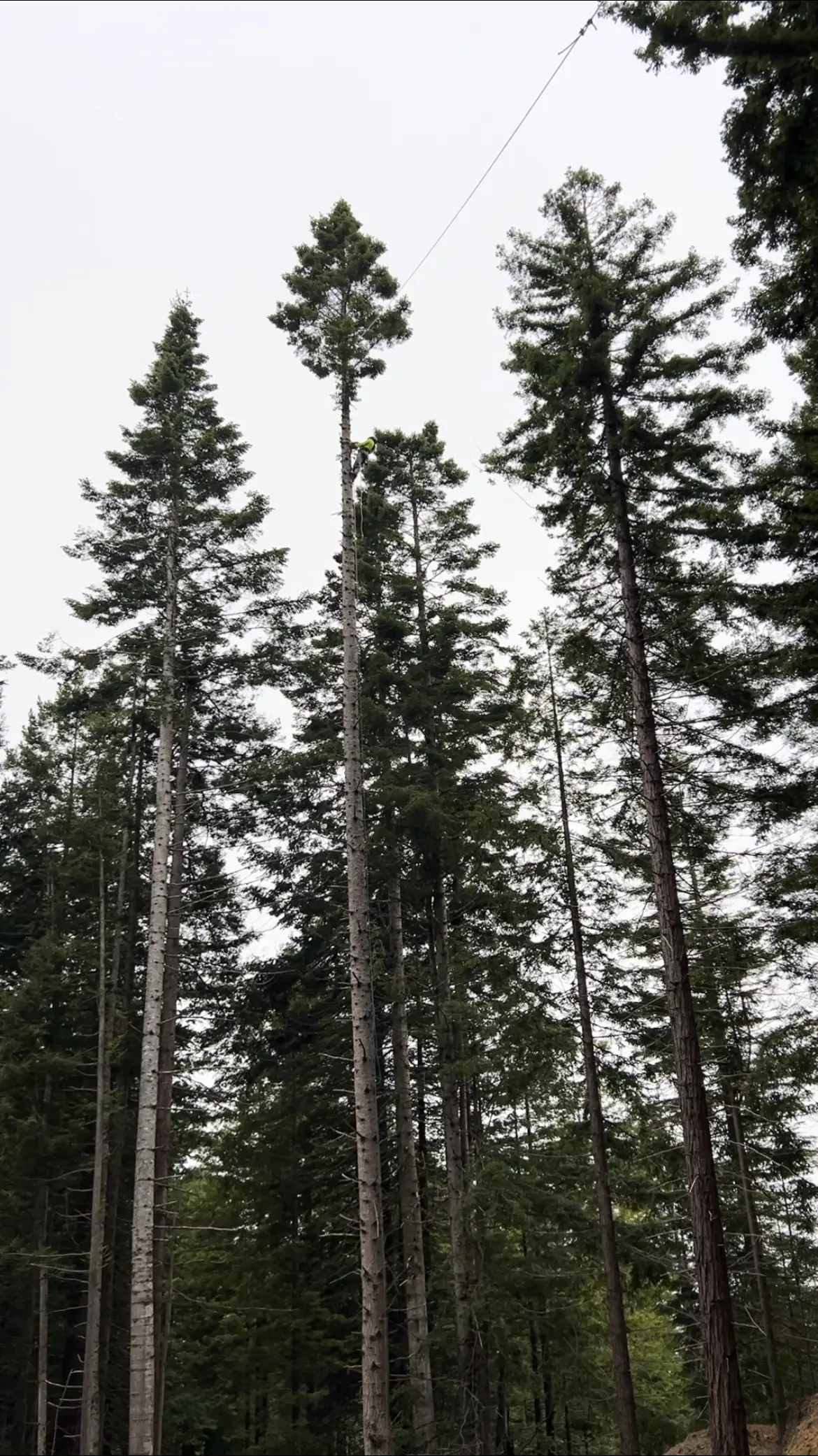
On the work days, the crew starts close to the house and works out. Limbs get lifted with pole saws and climbing where the trees are big. Dead trees are felled where there is a lay and dismantled where there is not. Brush is cut at the base and dragged to the chipper. Everything that can go through the chipper goes through it, and the chips are either hauled or spread thin in an area away from structures, which is a legitimate use of them as long as the layer is not deep.
The big wood from removed trees is bucked into rounds and left for firewood if you want it, or hauled if you do not. A lot of ranch properties want the firewood, and a defensible space job can produce several cords.
When to do it
The timing question has two honest answers that pull in different directions.
The best time for the vegetation is late winter and spring, after the worst of the storms and before the brush has put on its summer growth. The soil is soft, which is hard on a truck but easy on a stump. Birds are nesting from spring into early summer, so on big brush jobs we look before we cut and work around active nests. Cutting brush in spring means you get a full dry season of benefit.
The best time for the schedule is fall and winter, because that is when the crews are not booked out and when a job can get done in a week instead of waiting a month. It is also when storm cleanup and defensible space overlap. Getting dead trees out, limbs lifted off the roof, and brush back from the house makes a property safer in a January windstorm and in a September fire at the same time. If you can only do it once a year, doing it in fall covers both.
What we would not do is wait until August. By then the brush is dry, the crews are booked, and there are restrictions on running saws and chippers in the heat of the day on some days. Every year we get calls in late summer from people who just got a notice, and we get to them, but it is the hardest time to do the work well.
Slopes, roads, and access
The properties on the ridges above the valley bring two practical problems that flat lots do not.
The first is the slope itself. Working on a steep hillside is slower, harder on the crew, and needs a different approach to felling. Trees on a slope are often felled uphill or across the slope and winched, rather than dropped downhill where they take everything with them. Brush on a slope is dragged uphill to a chipper on the road, which is real work. The number reflects that, and it should.
The second is the driveway. A lot of ranch roads above Fortuna are long, narrow, and tight in the turns, and getting a chip truck up them is a question, not an assumption. Where the truck cannot get to the work, we set the chipper at the closest point and drag material to it, or in some cases chip on site and spread the chips. Tell us about the road when you call. It changes the plan.
Insurance, inspections, and the letter
A growing number of people in the hills above the valley are doing defensible space because their insurer told them to, or because they got an inspection notice. We do not do inspections and we cannot speak for what an inspector or an underwriter will accept. What we can do is do the work to the current guidance, document it with before-and-after photos, and give you an invoice that describes exactly what was done and where. That paperwork has helped homeowners with insurers and it costs nothing extra. Ask for it when you book.
Maintenance after the first job
The first defensible space job on a property that has never had one is the big one. After that, it is maintenance: an annual walk in late winter, a day or two of brush and limb work, and dead trees as they show up. Brush regrows, broom seeds come back, and firs seed in under the oaks. Keeping ahead of it is a lot cheaper than starting over every five years. A lot of our valley clients have us out once a year in the same month, and the job gets smaller every time.
The short version
Defensible space above Fortuna and Ferndale means clearing the five feet against the house, lifting limbs and spacing shrubs within thirty feet, and thinning and breaking up fuel out to a hundred feet or the property line, with bigger distances on slopes. Keep the healthy oaks, big firs, and redwoods. Remove the dead trees, the eucalyptus, the broom, the blackberry, and the ladder fuel. Do it in fall or spring, not August. Get the paperwork if your insurer is asking.
Assessments and quotes are free. Send the address and a few photos with the quote form, or pick a time on the calendar, and the Fortuna crew will walk the property with you.